
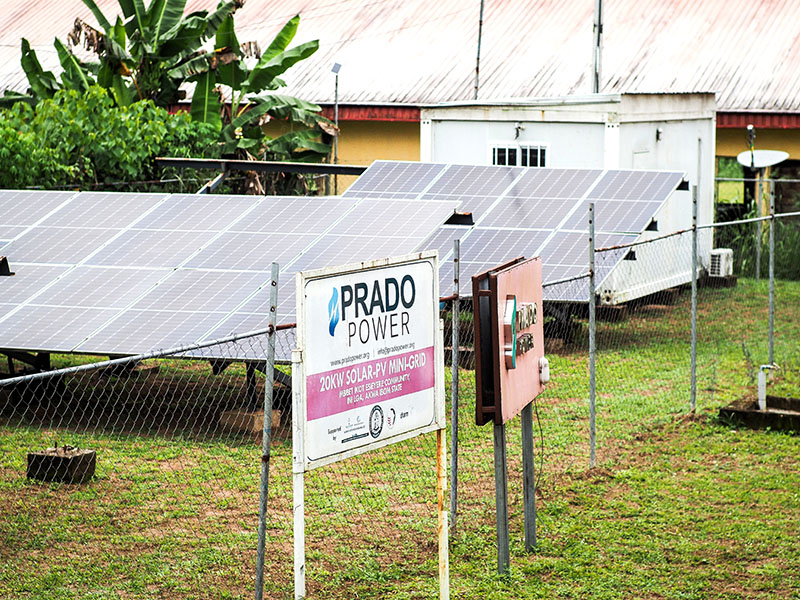
Abuja Business News has selected Prado Power as its Business of the Month for October 2026, recognising an Abuja-headquartered renewable-energy company that is combining a proven mini-grid operating record with fresh institutional financing and a growing pipeline of projects aimed at expanding reliable electricity access for households and small businesses.
Selected for current investment momentum, measurable operating impact, Abuja roots, infrastructure execution and the commercial relevance of its clean-energy expansion.
Why Prado Power was selected
Abuja Business News reviewed current Abuja-based businesses across sectors including technology, real estate, professional services, mobility, finance and infrastructure. Prado Power emerged as the strongest October candidate because its recent progress is supported by both operating evidence and external institutional validation.
The selection is an editorial recognition rather than a paid award. Our assessment considered four factors:
- Abuja presence: Prado Power is headquartered in Abuja and has operated from the capital for more than a decade.
- Current capital validation: the company has secured fresh financing in 2026 from major development and climate-finance institutions.
- Execution track record: Prado already operates multiple mini-grids rather than remaining at concept stage.
- Measurable economic impact: its projects supply electricity to underserved communities, households and MSMEs while supporting productive economic activity.
Fresh REPP 2 financing strengthens the October case
The most recent development came at the end of September, when REPP 2, a private debt fund managed by climate and impact investor Camco, provided a senior debt facility to Prado Power through a special-purpose vehicle.
The financing will support the construction and operation of five solar mini-grids with battery storage in Benue and Nasarawa states.
The projects are planned to deliver a combined 1.84 MWp of solar photovoltaic capacity and 5.2 MWh of battery storage, targeting more than 12,000 connections for households and micro, small and medium-sized enterprises.
Camco also says the projects are expected to displace diesel generation and avoid more than 1,100 tonnes of carbon dioxide emissions annually.
Institutional investors are already backing the company
The REPP 2 transaction builds on a much larger 2026 financing story.
In April, the International Finance Corporation and Norfund announced a broader distributed-energy initiative supporting several Nigerian renewable-energy companies, including Prado Power.
For Prado, the programme includes up to $10 million in financing structured across IFC senior debt, Norfund parallel financing and concessional capital.
The financing is intended to support a larger rollout of solar mini-grids under the World Bank-backed Nigeria Distributed Access through Renewable Energy Scale-up programme.
That level of institutional participation matters because mini-grid development is capital intensive. Companies need long-term financing for solar equipment, batteries, distribution networks, metering, construction and operating systems before customer revenues are fully established.
Prado Power already has an operating footprint
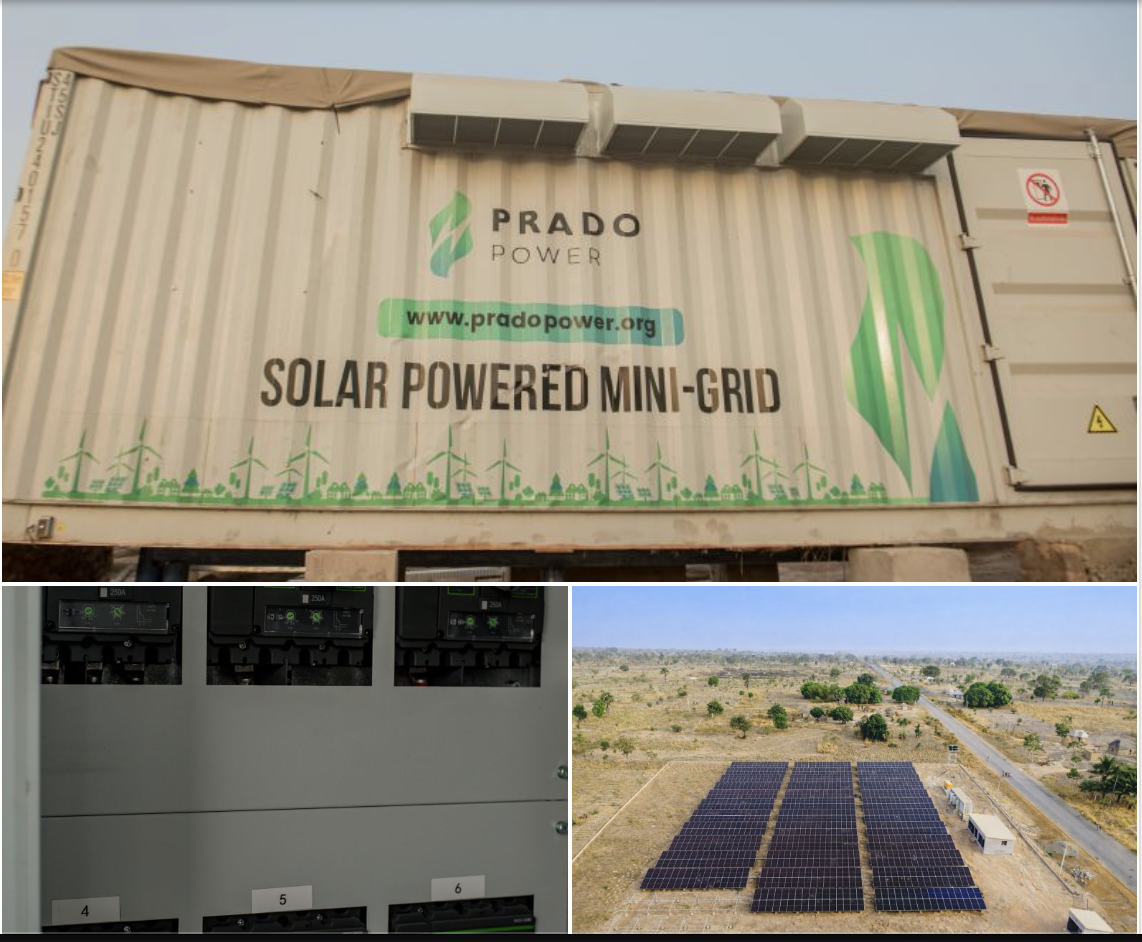
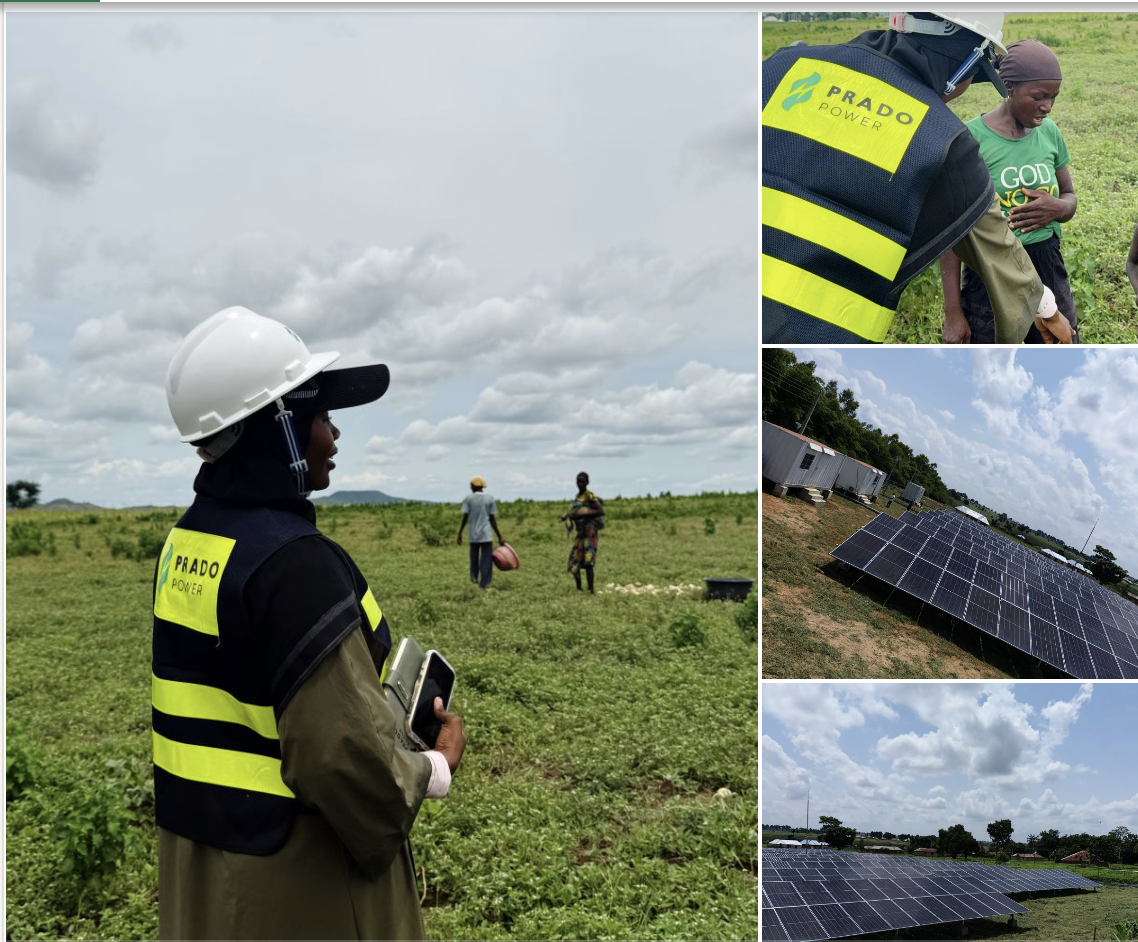
According to IFC’s project disclosure, Prado Power operates 10 mini-grids with approximately 0.7 MW of installed capacity, serving more than 100,000 people across Benue, Adamawa, Niger, Akwa Ibom and Ondo states.
The company is also constructing additional mini-grid projects as it expands its distributed-energy portfolio.
This operating base is one of the main reasons Prado Power stands out. The company is not relying solely on a future business plan; it has existing infrastructure, customers and project-development experience.
Abuja is the headquarters of a national energy business
Prado Power’s headquarters are in Abuja, with the company’s official materials listing its base in the Federal Capital Territory.
Its projects, however, extend well beyond Abuja.
The company’s strategy is focused on areas where grid electricity is unavailable, unreliable or economically insufficient, particularly underserved communities and commercial users that can benefit from decentralised renewable energy.
This is an important Abuja business story because it demonstrates how a company headquartered in the capital can build infrastructure and economic impact across multiple Nigerian states.
Mini-grids do more than power homes
One of the stronger elements of Prado Power’s model is the connection between electricity access and productive economic activity.
Its project portfolio includes communities where power supports:
- small retail businesses;
- phone charging and digital services;
- barbing and beauty businesses;
- agro-processing;
- cold storage;
- healthcare and education facilities; and
- household consumption.
This matters because energy access creates greater economic value when businesses can use electricity to increase productivity, extend operating hours, reduce fuel costs or add new services.
Women-led enterprise support is part of the model
Camco has also supported Prado Power and Farm Warehouse through the REPP 2 Technical Assistance Facility to pilot productive-use equipment for women in Benue State.
The programme combines solar mini-grid electricity with agricultural services, equipment, microcredit and insurance.
That approach strengthens the development case for the company because the electricity infrastructure is being linked directly to income generation rather than measured only by the number of connections installed.
Prado Power’s business model
The company operates across renewable-energy development and clean-energy infrastructure.
Its current service and project areas include:
- solar and hybrid mini-grids;
- commercial and industrial solar;
- utility-scale solar development;
- residential solar solutions;
- energy storage; and
- productive-use energy systems.
Prado says its mission is to provide affordable cleantech solutions for off-grid and underserved communities as well as commercial and industrial clients.
The commercial opportunity is getting larger
Nigeria’s electricity deficit continues to create a substantial market for distributed energy.
For businesses operating beyond reliable grid coverage, the alternative is often diesel or petrol generation, which exposes operators to fuel-price volatility, maintenance costs and supply interruptions.
Solar mini-grids and hybrid systems can reduce some of those pressures while creating recurring infrastructure businesses around electricity sales, equipment, maintenance, metering and customer management.
The challenge is financing. Prado Power’s ability to attract institutional debt is therefore commercially important because it gives the company more capacity to move projects from development into construction.
What still needs to be proven
Business of the Month recognition does not mean the company is free of execution risk.
The next phase will require Prado Power to demonstrate that it can:
- build the newly financed projects on schedule;
- maintain battery and solar performance over time;
- convert projected connections into paying customers;
- manage collections and operating costs effectively;
- deliver affordable tariffs to communities and MSMEs; and
- scale without weakening service quality.
Those indicators will determine whether recent financing translates into sustainable long-term growth.
Why this matters to Abuja’s business identity
Abuja is often viewed primarily as a government and professional-services economy. Prado Power represents a different story: an Abuja-headquartered company building physical energy infrastructure and attracting international development and climate capital.
That matters for the capital’s business ecosystem.
A stronger Abuja economy needs companies that do more than serve local consumer demand. It also needs businesses capable of developing technology, infrastructure and services that can scale nationally and compete for institutional capital.
Abuja Business News assessment
On the evidence available as October begins, Prado Power combines the strongest balance of Abuja roots, measurable operating activity, fresh financing, national scale potential and economic impact among the businesses reviewed for this month’s recognition.
The selection also reflects the type of company Abuja Business News wants the Business of the Month platform to highlight: businesses building credible systems, creating economic value and demonstrating progress that can be independently examined.
What Abuja Business News will watch next
We will be watching construction progress on the five newly financed mini-grids, implementation under the IFC and Norfund-backed programme, the number of new customer connections and whether Prado Power continues to convert institutional finance into operating energy assets.
If the company executes successfully, its 2026 financing momentum could position it for a much larger role in Nigeria’s distributed-energy market.
Sources:International Finance Corporation; IFC Prado DARES Project Disclosure; Prado Power; Index Prima; Camco / REPP 2 announcement.
Leave a Reply
You must be logged in to post a comment.