
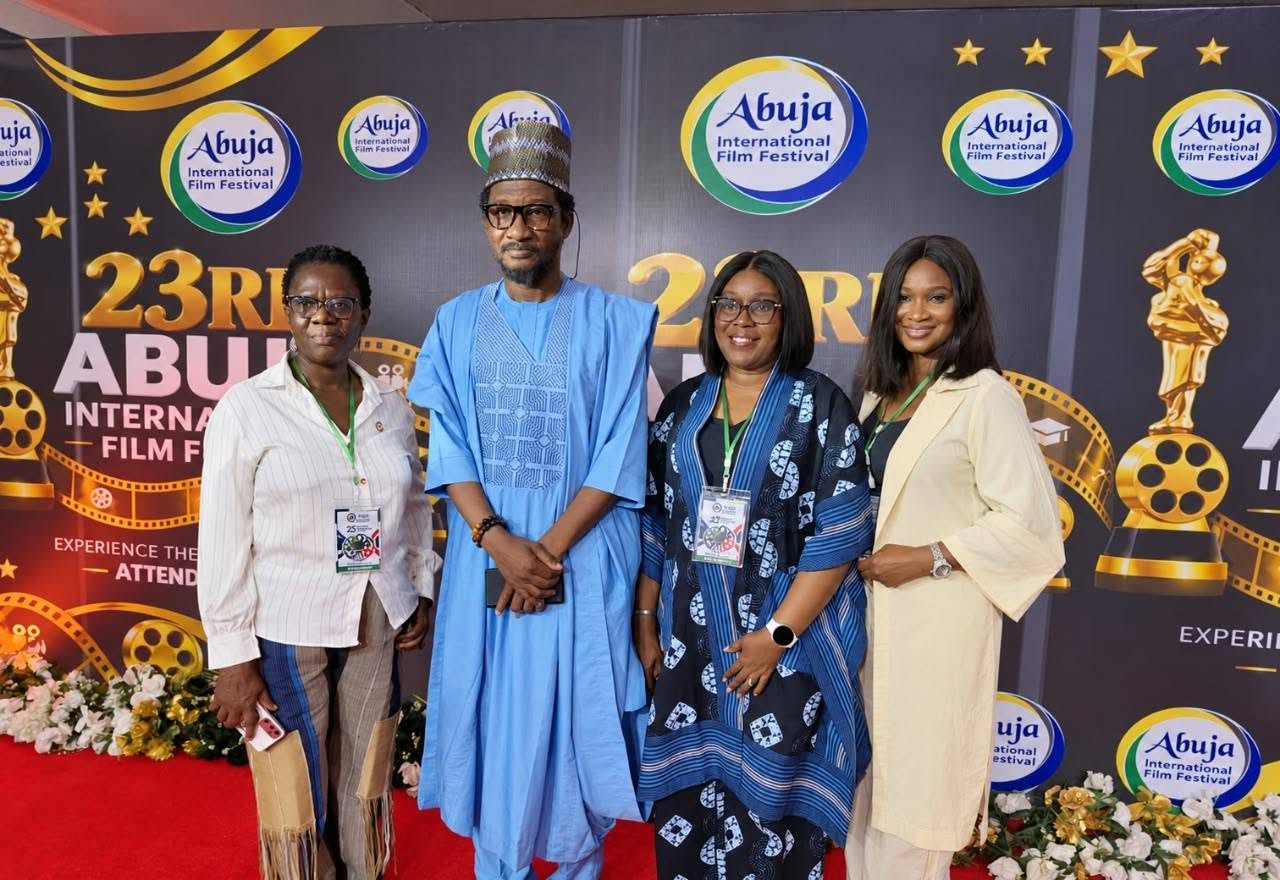
The Abuja International Film Festival has become the setting for formal Nigeria–China talks on theatrical distribution, licensing, film classification, technology exchange and intellectual-property protection—an effort aimed at creating legitimate commercial routes between Nollywood and one of the world’s largest cinema markets.
The National Film and Video Censors Board (NFVCB) confirmed that its Executive Director and Chief Executive Officer, Dr Shaibu Husseini, received a Chinese delegation during the 23rd Abuja International Film Festival. The engagement explored how Nigerian films could reach Chinese audiences and how Chinese productions could enter Nigeria through registered distributors and compliant classification processes.
The meeting gives the festival a business dimension beyond screenings and awards. If translated into operating agreements, the discussions could affect producers, distributors, cinemas, streaming platforms, dubbing and localisation firms, rights lawyers, technical-service providers and investors seeking cross-border film opportunities.
What the Abuja talks covered
| Commercial area | Issue discussed |
|---|---|
| Theatrical distribution | Routes for Nigerian films into China and Chinese films into Nigerian cinemas |
| Licensing and rights | Transparent rights acquisition and legitimate cross-border distribution |
| Classification | Better understanding of the regulatory procedures in both markets |
| Technology | Modern classification infrastructure and professional knowledge exchange |
| Intellectual property | Reducing piracy and the circulation of unclassified content |
| Market access | Engagement among regulators, registered distributors and film-industry companies |
The NFVCB said all film-distribution arrangements involving Nigeria must comply with the country’s regulatory framework. Husseini advised the visiting delegation to work only with duly registered Nigerian distribution companies and to verify prospective partners’ regulatory status with the Board.
The Chinese delegation included Bai Yimin, chairman of Huaxia Film Distribution Co. Ltd.; representatives of China Film Distribution; and executives from Tai Ge Film Company and Tiger Pictures Entertainment. The NFVCB said the delegation invited Husseini to China for further engagement on distribution, licensing, classification, technology and professional exchange.
Why the talks matter commercially
International distribution remains one of Nollywood’s persistent commercial constraints. Producing a film does not guarantee cinema placement, streaming acquisition, marketing support or revenue collection in another country. Cross-border releases also require contracts covering rights territories, censorship and classification, language localisation, delivery formats, marketing commitments and royalty reporting.
A workable Nigeria–China framework could create opportunities for Nigerian producers with export-ready catalogues, but market access will depend on clear commercial terms and reliable counterparties. For Chinese producers, Nigeria offers a large audience and a gateway into West African exhibition and broadcast markets, subject to local licensing and classification.
News Agency of Nigeria reported that the festival hosted more than 90 local and international films representing over 120 nations. Festival director Temitope Duker described the China relationship as an effort to build pathways for co-productions, professional training, technology transfer and distribution agreements.
AI raises new rights and compliance questions
The festival’s theme, “Frames Without Borders: AI, Ethics, and the Future of Filmmaking,” places emerging technology beside the distribution agenda. AI can reduce costs in script development, editing, visual effects, dubbing and localisation, but it also creates questions about authorship, performer consent, training data, ownership and disclosure.
The NFVCB said the discussions addressed the influence of AI, digital distribution platforms and unclassified films circulating online. For producers and technology vendors, the practical implication is that AI-enabled work should still have a documented rights chain: who created each asset, what data or source material was used, whether likenesses and voices were authorised, and who owns the final commercial rights.
What Nigerian film businesses should prepare
- Rights documentation: maintain contracts showing ownership of scripts, music, footage, performances and underlying intellectual property.
- Export-ready materials: prepare high-quality masters, subtitles, dubbing assets, trailers, stills and accurate metadata.
- Regulatory checks: verify distributors and understand classification requirements before granting territorial rights.
- Commercial terms: define territories, release windows, minimum guarantees, revenue shares, marketing obligations and reporting rights.
- AI disclosures: document where generative tools were used and secure consent for any recognisable voice, image or performance.
- Anti-piracy provisions: establish takedown, watermarking, monitoring and enforcement responsibilities.
Talks are not yet a completed deal
The NFVCB announcement describes an exploratory strategic engagement and willingness to pursue appropriate agreements. It does not identify a signed distribution treaty, committed investment value, release timetable, guaranteed number of films or agreed revenue-sharing formula.
Businesses should therefore treat the Abuja meeting as a potentially important market-opening process—not as proof that a commercial pipeline is already operational. The next evidence to watch will be signed agreements, named licensed distributors, approved film slates, classification procedures and verifiable releases in both countries.
Related Reads
- Abuja polo playoffs put sports tourism and hospitality in focus
- FG launches trade intelligence tools in Abuja for exporters
- Abuja-based Layer3 raises ₦1.5bn for cloud expansion
Leave a Reply
You must be logged in to post a comment.