
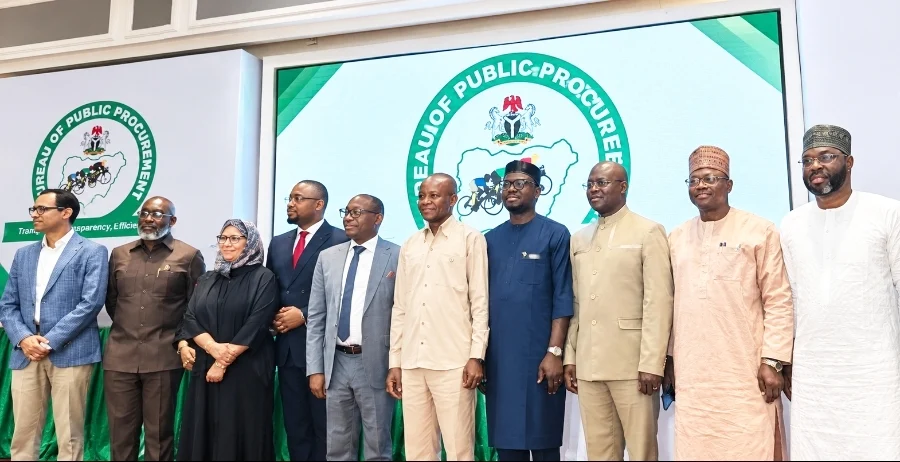
The Bureau of Public Procurement has launched a free digital training portal in Abuja to help Nigerian micro, small and medium enterprises understand federal procurement rules, prepare stronger bids and compete more effectively for government contracts.
The MSMEs Public Procurement Training Programme and Digital Learning Portal was unveiled on Tuesday, 27 October 2026, with support from the World Bank under the Sustainable Procurement, Environmental and Social Standards Enhancement project. The initiative is being implemented with the Bank of Industry and the Small and Medium Enterprises Development Agency of Nigeria.
What the procurement portal offers
BPP Director-General Adebowale Adedokun said the programme contains five interactive modules covering the government procurement cycle—from identifying opportunities and preparing bids to contract delivery and performance management.
The platform includes quizzes, practical examples and a certificate of completion. It is designed for computers, tablets and smartphones, including users with limited internet bandwidth. Registration is available through the official MSME training portal.
The commercial problem is straightforward: capable small firms are frequently excluded before price or quality can be assessed because documents are incomplete, eligibility requirements are misunderstood or bids are not submitted in the required format. Minister of State for Industry, Trade and Investment John Enoh said this knowledge gap also increases dependence on intermediaries and raises the cost of doing business.
A route into a large but demanding market
Government purchasing is one of the country’s largest markets for goods, works and services. SMEDAN Director-General Charles Odii said Nigeria has about 39.65 million nano, micro, small and medium enterprises, yet many lack clear information about entry requirements and procurement processes.
For Abuja-based suppliers, consultants, contractors and professional-services firms, the portal can lower the initial learning cost of pursuing federal opportunities. It may be particularly useful to women-owned businesses, youth entrepreneurs, persons with disabilities and firms outside established contracting networks.
The programme does not remove the need for tax records, registrations, technical capacity, credible pricing, performance history or working capital. It gives businesses a structured way to understand the rules before committing time and money to a bid.
What SMEs should do before bidding
- Complete the training: use the modules to map the full procurement cycle, not only bid submission.
- Build a compliance file: keep corporate, tax, pension, industrial-training and sector documents current where applicable.
- Read every solicitation carefully: create a checklist for mandatory forms, deadlines, bid security, technical specifications and delivery terms.
- Price the full obligation: include financing, logistics, taxes, insurance, performance guarantees and the cost of delayed payment.
- Protect cash flow: assess whether the business can deliver before receiving final payment and avoid contracts that exceed operational capacity.
- Document performance: retain completion certificates, client references and evidence of similar work for future bids.
Training improves readiness, not entitlement
Adedokun stressed that completing the programme does not guarantee a government contract. Awards remain subject to competition, transparency, accountability and value-for-money rules. A certificate should therefore be treated as evidence of learning, not as prequalification or an official promise of work.
The World Bank’s regional procurement practice manager, Nazaneen Ali, also argued that success should be measured by outcomes: whether trained firms submit better bids, win and deliver more contracts, grow and create jobs—not merely by registration numbers.
That distinction matters. The portal can reduce information barriers, but wider MSME participation will also depend on agencies publishing opportunities clearly, dividing suitable contracts into manageable lots, evaluating bids consistently and paying successful suppliers on time.
Business implications for Abuja
The launch creates opportunities beyond direct contracting. Abuja’s accountants, lawyers, bid consultants, training providers and business associations can help firms translate the modules into compliant internal systems. Banks and fintech lenders may also find a clearer pipeline of procurement-ready SMEs, although contract financing should remain tied to verified awards and realistic payment timelines.
For policymakers, the most useful next step will be publishing adoption and performance data: module completion, bid participation, award rates, delivery outcomes and payment experience by business size, sector, location and ownership profile. That evidence would show whether digital training is actually widening access to public markets.
Related Reads
- cyPHER Programme Targets Abuja Women-Led Micro Businesses
- NSIA Awards $275,000 to Startups at Abuja Demo Day
- NESG Launches Abuja Bill Tracker to Help Businesses Anticipate Regulatory Change
Leave a Reply
You must be logged in to post a comment.