

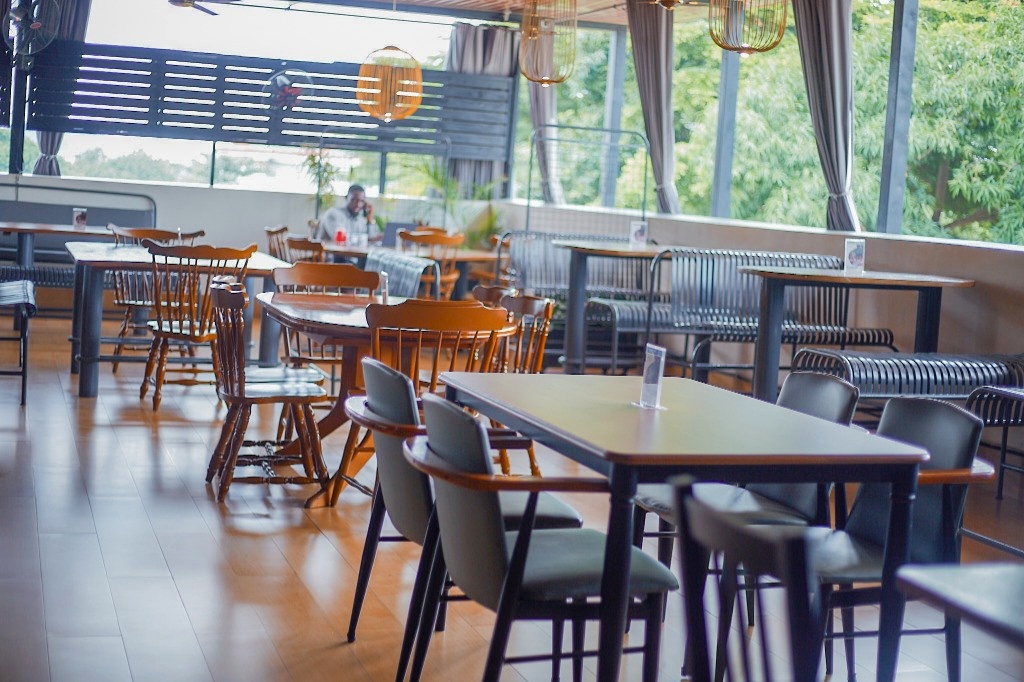
Abuja-founded Akara Café has expanded its hospitality footprint with Pavillon, a premium concept in Garki, using financing from Fidelity Bank’s FundHer programme to support development costs while preserving working capital for its existing operations.
The outlet is located at Strip Mall on Tafawa Balewa Way and operates daily from 8:00 a.m. to 9:00 p.m., according to Akara Café’s official locations page. It offers dine-in and pick-up service and joins the brand’s Wuse, Gwarinpa and Garki takeout operations.
Founder Martha Essienanwan E., who is also known professionally as Martha Rrazi, described Pavillon as a premium expression of the Akara Café brand. Independent reports published in October say FundHer financing covered part of the costs of developing the new concept while allowing the business to retain cash for day-to-day operations.
Neither Akara Café nor Fidelity Bank has disclosed the amount borrowed, the interest rate, security provided or the agreed repayment period. Those details should not be inferred from the programme’s general lending limits.
From local breakfast concept to multi-location brand
Akara Café built its proposition around what the company calls a “Mixed Nigerian Breakfast”—combining Nigerian and international breakfast staples while keeping akara at the centre of the menu. Pavillon extends that positioning into a more premium physical environment and a longer daily operating window.
The move is commercially significant because hospitality expansion typically creates two competing demands on cash. A new location requires fit-out, equipment, deposits, inventory and launch spending, while the original business still needs enough working capital to pay suppliers, staff and other operating expenses.
Akara Café’s account of the transaction suggests FundHer was used to manage that tension: financing supported part of the expansion expenditure instead of forcing the company to fund the entire project from cash generated by its existing branches.
How Fidelity’s FundHer product works
Fidelity Bank markets FundHer to women-owned and women-led businesses across trade, manufacturing, services, agribusiness, technology, healthcare, education and the creative economy.
- Working-capital finance is advertised at up to ₦50 million.
- Asset finance and business-expansion loans are advertised at up to ₦100 million.
- Published repayment periods run from 12 to 24 months.
- Eligible businesses must generally have operated for at least two years and meet the bank’s female-ownership or female-leadership criteria.
Fidelity says collateral requirements vary by loan size. It advertises flexible collateral options below ₦20 million, while facilities above that level require a legal mortgage or cash collateral. Approval remains subject to the bank’s assessment; the published maximum is not an automatic entitlement.
What the expansion means for Abuja SMEs
For hospitality operators, Pavillon provides a practical example of using term finance for expansion while protecting operating liquidity. That structure can be more resilient than committing all available cash to a new outlet, particularly in a sector where food inputs, power, rent and staffing require continuous funding.
The case also shows that lenders are looking beyond generic SME products toward financing designed for women-led enterprises. However, founders considering a similar route should compare the effective cost of credit, collateral exposure, repayment timing and realistic cash generation from the new location before borrowing.
For Akara Café, the next commercial test is execution: whether the premium format can sustain customer traffic, pricing and service quality without weakening the economics of the established branches. No revenue targets, employment figures or further rollout timetable have been disclosed.
Related Reads
- DBN, LoftyInc Award ₦24m Grants as Abuja Programme Builds Sanitation SME Finance Pipeline
- Dee Utensils Expands Wuse 2 Footprint with Larger Abuja Showroom
Sources
- Akara Café official locations page (Pavillon address, hours, service options and company image)
- Fidelity Bank FundHer product page (loan categories, limits, eligibility, repayment and collateral framework)
- FAS News: How Fidelity FundHer Financing Helped Akara Café Turn Premium Idea Into Pavillon (30 October 2026)
- Safari Xpress News: Fidelity Bank’s FundHer supports Akara Café’s expansion into premium market (19 October 2026)
Leave a Reply
You must be logged in to post a comment.