
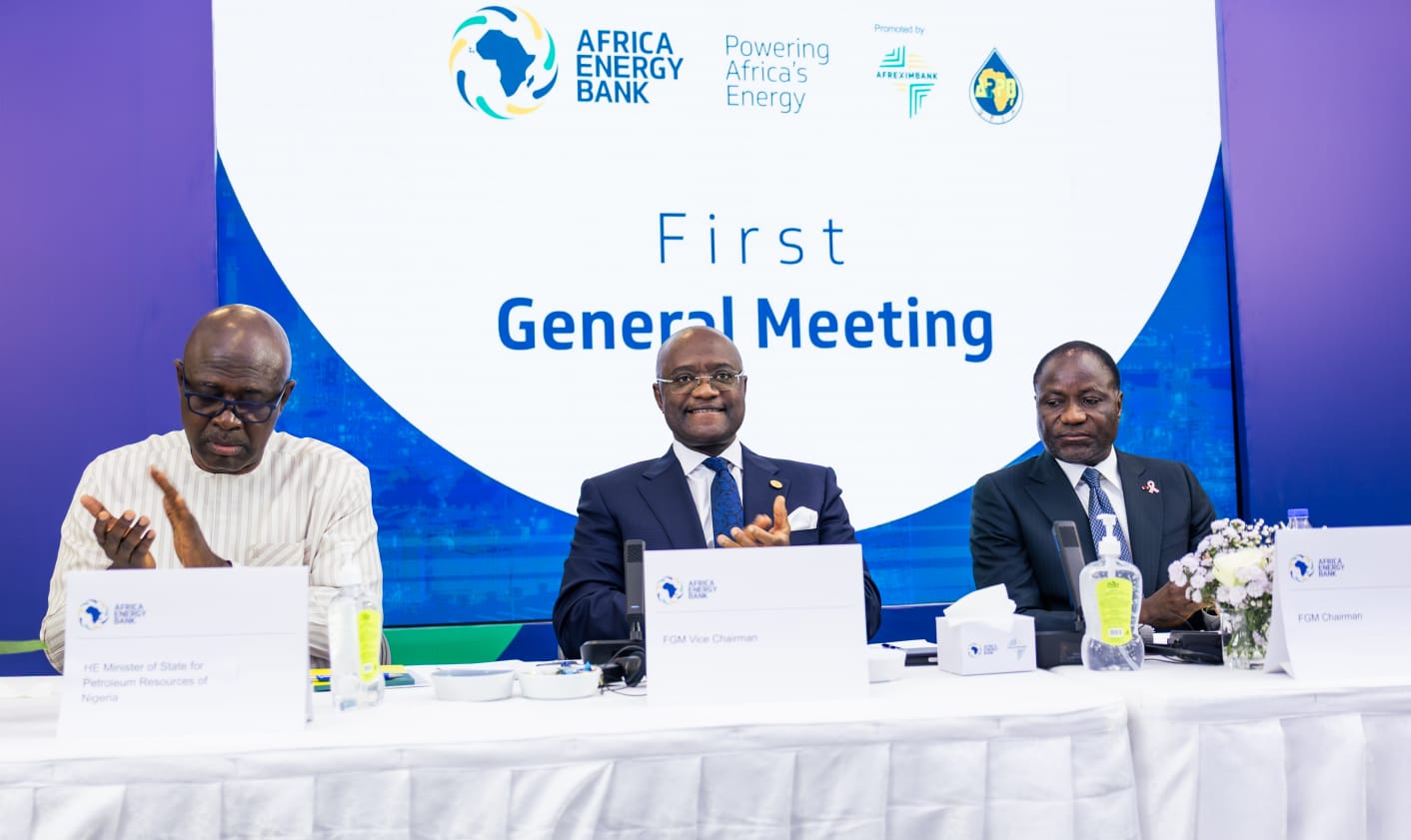
Afreximbank and the African Petroleum Producers’ Organisation have formally established the Africa Energy Bank in Abuja, creating a new supranational financing institution with $5 billion in authorised capital and a mandate spanning the continent’s energy value chain.
The formal establishment was announced after the bank’s inaugural general meeting in Abuja on 31 October 2026. The meeting appointed Egyptian banker Helmy Ghazi as the institution’s first president and constituted its inaugural board of directors.
The $5 billion figure is the bank’s authorised capital—the maximum share-capital framework approved for the institution. It should not be read as confirmation that $5 billion has already been paid in, committed to projects or made immediately available for lending. The announcement did not publish current paid-in capital, a first lending date or a list of approved transactions.
A new financing institution headquartered in Abuja
The Africa Energy Bank is promoted by Afreximbank and APPO, the intergovernmental organisation representing African petroleum-producing countries. It is structured as an independent, supranational pan-African financial institution that can attract capital from governments, national oil companies, financial institutions and private investors.
Nigeria hosts the bank’s headquarters at the Afreximbank African Trade Centre in Abuja. APPO and Afreximbank received the keys to the facility in February 2026 as governance and operational preparations continued.
The bank’s mandate covers exploration and production, transportation, processing, refining and distribution. Its promoters also frame the institution as part of a broader effort to finance energy security and industrial development while international lenders reduce exposure to fossil-fuel projects.
What the $5bn mandate could mean commercially
For energy companies, the important question is how the authorised-capital structure becomes investable financing. Project sponsors will need clarity on the bank’s credit products, eligible jurisdictions, ticket sizes, pricing, security requirements, environmental standards and co-financing model before they can assess whether a proposal fits the institution’s mandate.
The potential commercial reach extends beyond upstream oil and gas. Refining, gas-processing, storage, pipelines, distribution infrastructure and energy-linked industrial projects could generate demand for engineering, legal, insurance, environmental, technology and transaction-advisory services if the bank begins deploying capital at scale.
For Abuja, the headquarters adds a continental financial institution to the city’s growing cluster of multilateral, trade and development-finance organisations. That can create recurring demand for professional services, corporate accommodation, events, security, technology, recruitment and facilities management. The scale of that local impact will depend on staffing, procurement and transaction activity that the bank has not yet disclosed.
What businesses and investors should watch
- Capital subscriptions: published details on paid-in capital and the timing of contributions from founding and prospective shareholders.
- First transactions: the initial projects, countries, sectors and financing instruments approved by the bank.
- Procurement: formal opportunities for legal, financial, engineering, technology, communications and facilities-management providers.
- Credit standards: environmental, governance, security and commercial requirements project sponsors must satisfy.
- Abuja operations: staffing, office activation and supplier engagement at the headquarters.
Related Reads
- New Era for African Trade: Afreximbank Opens First African Trade Centre
- S&P Global Energy Opens Abuja Office, Deepens West Africa Market Intelligence Push
- AFRIDATA Unveils $650m–$1bn Nigeria Data Centre Plan at Abuja Launch
Leave a Reply
You must be logged in to post a comment.