
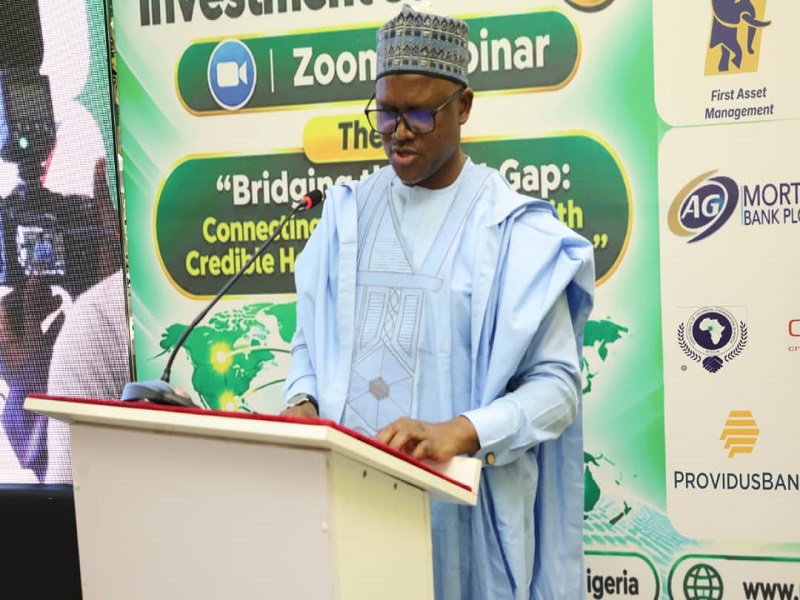
NiDCOM has scheduled the ninth Nigeria Diaspora Investment Summit for 10–11 November, positioning Abuja as the meeting point for diaspora investors, regulators, project sponsors and verified service providers seeking more credible routes into Nigerian capital-market and infrastructure opportunities.
The Nigerians in Diaspora Commission announced the two-day programme on 6 November under the theme “Bridging the Trust Gap: Connecting Diaspora Capital with Credible Home-based Opportunities.” Its official statement says the event will be delivered mainly online through Zoom, with limited physical attendance at the Shehu Musa Yar’Adua Centre in Abuja.
NiDCOM Chairman/CEO Abike Dabiri-Erewa said Nigerians abroad could contribute up to $100 billion annually through strategic investment. That figure represents potential, not committed capital, a fund already available for projects or a guaranteed outcome of the summit.
What the Abuja summit will cover
NiDCOM says the programme will focus on capital-market opportunities, infrastructure, public-private partnerships, business regulation and investor protection. Institutions expected to participate include the Securities and Exchange Commission, Nigerian Exchange Group, Central Bank of Nigeria, Ministry of Finance Incorporated, NEXIM Bank, Infrastructure Concession Regulatory Commission, Nigeria Sovereign Investment Authority, Corporate Affairs Commission and Presidential Enabling Business Environment Council.
The first day is expected to examine capital-market instruments, entry procedures, risk management and safeguards for diaspora investors. The second will turn to bankable infrastructure projects, PPP structures, business registration, due diligence and anti-fraud measures.
For Abuja-based companies, the strongest feature is direct access to regulators, project sponsors and service providers. Entrepreneurs seeking investment can use those sessions to test compliance requirements and transaction structures before presenting opportunities to investors who may be evaluating Nigeria from abroad.
$100 billion is opportunity, not a financing commitment
The $100 billion estimate gives the summit a large headline, but businesses should separate the size of the potential diaspora pool from capital that can be deployed immediately. NiDCOM has not announced a dedicated $100 billion vehicle, an Abuja project allocation, a list of approved investments or a timetable for converting the estimate into transactions.
The commercial test will be what happens after the summit: how many projects enter due diligence, receive term sheets, secure regulatory clearance or reach financial close. Without those milestones, the figure remains an ambition rather than a measurable investment pipeline.
Mobolaji Lewis, chairman of the Nigeria Diaspora Summit Initiative, said the 2026 edition would prioritise a transparent and credible investment system rather than focus only on raising capital. That emphasis matters because diaspora investors often face information gaps, unclear project ownership, weak reporting and difficulty enforcing agreements across borders.
What Abuja businesses should prepare
Companies seeking diaspora capital will need more than a pitch deck. Investors are likely to expect evidence that the business, project and promoters can withstand independent review.
- Define the transaction: state the amount required, proposed debt or equity structure, use of funds and expected investor return.
- Show legal control: organise incorporation records, licences, land or concession documents, intellectual-property rights and material contracts.
- Provide verifiable numbers: prepare audited accounts where available, management figures, tax records, bank statements and realistic cash-flow forecasts.
- Explain the risks: identify currency, regulatory, construction, customer and execution risks, together with practical mitigation measures.
- Build investor reporting: decide how performance, spending, milestones and material problems will be reported after funding.
- Verify counterparties: confirm investor identity, source of funds, adviser credentials and authority to transact before sharing sensitive documents or paying fees.
The Abuja business impact
Although the 2026 programme has a limited physical component, it can still generate work for Abuja’s legal, accounting, corporate-registration, investment-advisory, project-development and due-diligence firms. Project sponsors may need help turning concepts into compliant investment memoranda, financial models and transaction documents.
Infrastructure developers and PPP advisers have a particular reason to pay attention because NiDCOM says bankable projects and public-private partnership routes will be discussed. Capital-market intermediaries, fintechs, export businesses and growth-stage SMEs may also benefit if the programme creates a reliable route to investors and regulators.
The summit should not be treated as an endorsement of every project presented or every service provider involved. Businesses and investors remain responsible for verifying ownership, approvals, financial assumptions and the enforceability of any agreement.
Access and verification
NiDCOM’s announcement gives 10–11 November 2026 and says participation will be virtual on Zoom with limited attendance at the Shehu Musa Yar’Adua Centre. A separate NiDCOM event listing describes the venue as a Zoom webinar. Participants should therefore register through the official NDIS channel and rely on their confirmed access instructions before travelling to the physical venue.
The commission says the summit is organised with the Nigeria Diaspora Summit Initiative. Interested businesses should verify registration, project-submission requirements, meeting availability and any fees directly through the official event website. No party should assume that attendance guarantees investment.
What to watch next
The most useful post-summit disclosures would be the number of investment-ready projects screened, value of transactions entering due diligence, sectors attracting interest, regulatory issues resolved and deals that progress to signed agreements or financial close. Those figures would show whether the trust-focused programme can convert diaspora interest into credible commercial activity.
Related Reads
- Investors Summit Brings Cross-Border Deal Programme to Abuja
- SEC Launches National Savings Scheme in Abuja, Targets ₦750tn Market by 2036
- NDIS 2025: A Hybrid Summit Connecting Diaspora Capital With Nigerian Opportunities
Leave a Reply
You must be logged in to post a comment.