
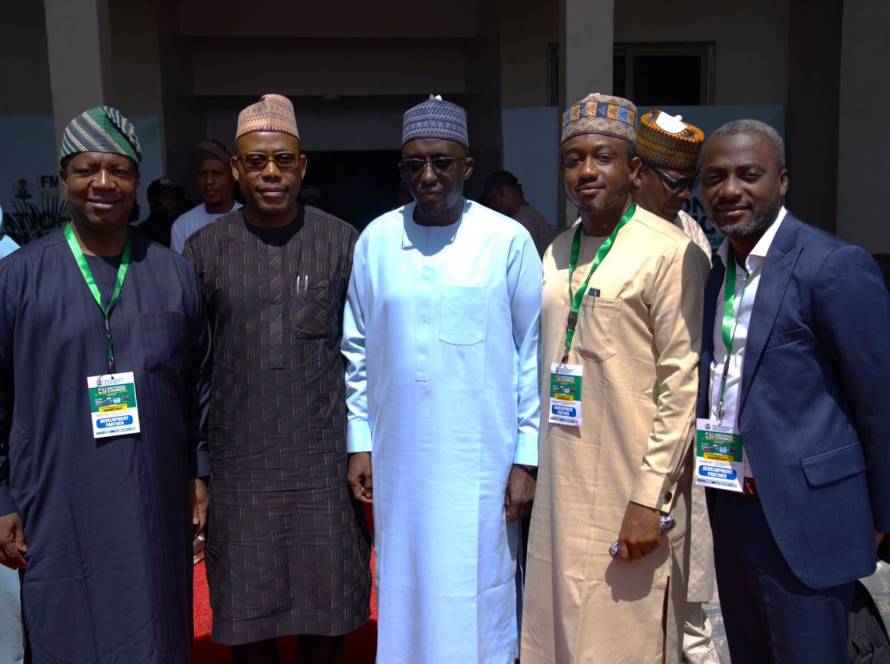
The National Agricultural Development Fund and Sahel Capital have signed an Abuja agreement to explore blended-finance structures intended to lower capital costs for eligible agribusiness SMEs, but no facility size, target rate or application window has been announced.
The Memorandum of Understanding brings together NADF’s public-sector and development mandate with Sahel Capital’s investment-management experience. The parties say the proposed structure could combine concessional or catalytic funding with privately managed capital, risk-sharing tools and technical support.
The agreement is national in scope, but its signing in Abuja matters for the capital’s food-processing, logistics, input-supply and agricultural-services businesses. These firms sit close to federal institutions and large consumer markets, yet face the same expensive-credit and working-capital constraints affecting agribusinesses across Nigeria.
What the Abuja agreement covers
NADF and Sahel Capital said they will examine financing arrangements under which NADF could provide capital alongside funds managed by Sahel Capital, including the Sahel Agribusiness Private Debt Fund. The framework may use concessional finance and risk-sharing mechanisms to improve the economics of lending to qualifying agricultural businesses.
The two institutions also plan to identify bankable agribusiness projects, share information, provide technical assistance and build monitoring and reporting systems. Sahel Capital is expected to contribute investment structuring, fund-management expertise and business selection, while NADF brings its development mandate and knowledge of national agricultural priorities.
Sahel Capital Managing Partner Mezuo Nwuneli said many small and medium-sized agribusinesses currently borrow at annual rates of 24 to 27 per cent. He argued that combining NADF capital with privately managed funding could reduce the blended cost and leave more business cash flow available for expansion.
An MoU—not an open loan programme
The commercial promise is significant, but the distinction between an agreement to explore a structure and an operating facility is essential. Neither institution disclosed a committed fund size, final interest rate, tenor, collateral policy, participating lenders, sector allocation or first-disbursement date.
No dedicated application portal for the Sahel Capital partnership has been announced. Businesses should therefore not treat the signing as evidence that applications are open or that finance will be available automatically.
NADF’s published financing guidance says it generally channels concessionary funds through approved participating financial institutions, which then conduct credit appraisal and lend to eligible enterprises. Its on-lending model can cover smallholder farmers, cooperatives, processors, input suppliers, storage and logistics businesses, mechanisation providers and other value-chain participants. The eventual Sahel Capital arrangement may have its own criteria, which have yet to be published.
Why blended finance could change the economics
Agribusinesses often need longer repayment periods than ordinary trading companies because production cycles, seasonal inventory and equipment investment can delay cash generation. High commercial rates can make an otherwise viable processing line, warehouse, cold-chain vehicle or irrigation project difficult to finance.
Blended finance attempts to improve that equation by using lower-cost or risk-bearing capital to attract additional private investment. If structured well, it can reduce the lender’s risk or funding cost, support a longer tenor and widen the pool of businesses that can meet repayment tests.
However, the headline rate will not be the only measure of value. Fees, security requirements, foreign-exchange exposure, repayment frequency, insurance costs and the length of any moratorium will determine the real financing burden. A lower nominal rate paired with a short tenor may still be unsuitable for a business with seasonal revenue.
What Abuja agribusinesses should prepare
- Document the funding use: specify whether capital is required for equipment, inventory, processing, storage, logistics or expansion, and link the request to measurable revenue or cost savings.
- Build a credible cash-flow model: show production cycles, customer-payment terms, seasonal risks and the repayment capacity of the business under weaker sales assumptions.
- Organise the credit file: prepare registration records, tax documentation, bank statements, management accounts, contracts, permits, insurance and evidence of ownership or control of key assets.
- Strengthen market evidence: purchase orders, off-take agreements, recurring customers and supplier records can demonstrate that financing will support a real commercial pipeline.
- Ask for the complete term sheet: compare the effective annual cost, tenor, repayment schedule, fees, collateral and default provisions—not only the advertised interest rate.
- Use verified channels: wait for NADF or Sahel Capital to publish formal eligibility and application information; do not pay intermediaries promising guaranteed access.
What to watch next
The next material milestone will be a defined financing vehicle or mandate with committed capital and transparent borrower terms. Businesses and investors should watch for the size of the facility, participating institutions, supported value chains, geographic scope, target pricing, maximum ticket size and disbursement timetable.
Impact should ultimately be measured by completed investments: the number and value of businesses financed, the reduction in effective borrowing cost, additional private capital mobilised, repayment performance and the production or jobs created. Until those details emerge, the Abuja MoU is best read as a credible financing-development step rather than a live funding offer.
Related Reads
- Fidelity Bank Opens 10–16% Intervention-Fund Route to Abuja SMEs
- $12m Abuja Entrepreneurship Centre Breaks Ground in Idu, Targets 1,500 MSMEs
- Zeenab Foods Opens Abuja Supplier Prequalification for Eight Commodities
Sources
- National Agricultural Development Fund — official MoU announcement and photograph
- News Agency of Nigeria — independent report on the Abuja signing and proposed financing structure
- TheCable — independent report on borrowing costs and the partnership
- National Agricultural Development Fund — official financing and on-lending guidance
Leave a Reply
You must be logged in to post a comment.