
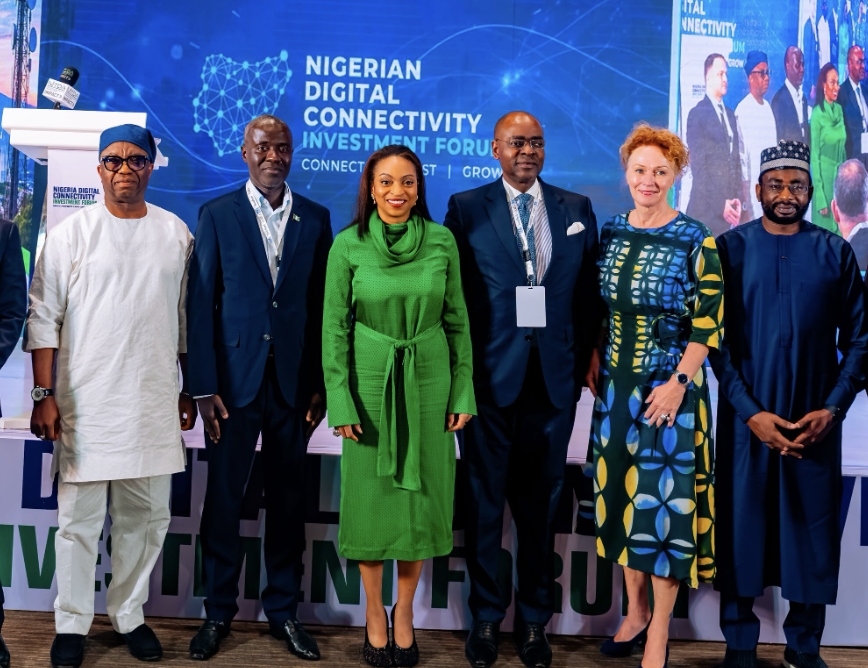

Abuja has hosted the maiden Nigeria Digital Connectivity Investment Forum as the Nigerian Communications Commission pushes for greater public and private investment in broadband, fibre, network modernisation and the digital infrastructure required to support Nigeria’s growing data economy.
The two-day forum, held in Abuja on 29–30 September 2026, was organised by the NCC in collaboration with Swedfund and Ookla and brought together regulators, investors, development-finance institutions, telecom operators, infrastructure providers, technology companies and development partners.
For Abuja businesses and investors, the discussion matters because digital infrastructure is increasingly becoming part of the capital stack behind almost every modern sector — from fintech and ecommerce to cloud services, AI, logistics, public services and enterprise connectivity.
NCC says Nigeria’s data consumption rose by nearly 47% in one year, strengthening the commercial case for more network capacity, fibre, data centres, power infrastructure and digital-service investment.
Data consumption is rising fast
NCC Executive Vice Chairman and Chief Executive Officer Dr Aminu Maida said data consumption increased from approximately 1.13 million terabytes in July 2025 to about 1.66 million terabytes in July 2026.
That represents growth of nearly 47 per cent within one year, according to the Commission.
For telecom operators, tower companies, fibre providers and infrastructure investors, that type of growth creates a straightforward commercial challenge: networks have to expand and modernise fast enough to support heavier usage without allowing service quality to deteriorate.
The investment need goes beyond coverage
Maida said the investment challenge is not simply about connecting more people. Existing users also require better service quality, more reliable networks and infrastructure capable of supporting future technologies.
That means investment opportunities extend across several layers of the digital economy, including:
- fibre-optic networks;
- mobile network expansion;
- tower and passive infrastructure;
- data centres and colocation;
- cloud infrastructure;
- power systems for telecom sites;
- enterprise connectivity;
- network monitoring and analytics;
- cybersecurity infrastructure; and
- next-generation digital platforms.
Abuja becomes the meeting point for digital-infrastructure capital
The forum’s location in Abuja is commercially significant. The capital concentrates federal regulators, ministries, development institutions, embassies, technology companies and professional advisers involved in investment approvals, policy and infrastructure development.
For investors evaluating Nigerian digital infrastructure, Abuja therefore functions as both a policy centre and a business-development hub.
The forum was designed to examine investment requirements, barriers to infrastructure deployment and partnership models capable of accelerating connectivity and economic development.
Right of Way remains part of the infrastructure equation
One of the recurring challenges in telecom infrastructure is the cost and complexity of deploying fibre across multiple jurisdictions.
NCC says it is continuing engagements with state governments around Right of Way issues, an important factor for fibre deployment and network expansion.
For investors, predictability around Right of Way charges, permits and deployment timelines can materially affect project economics.
Reducing friction in this area could make fibre projects easier to finance and scale.
Telecom infrastructure has been designated critical national infrastructure
The Commission also pointed to the designation of telecommunications infrastructure as Critical National Information Infrastructure.
The policy is intended to strengthen protection around telecom assets and reduce the risk posed by vandalism, theft and disruption.
For investors, infrastructure protection matters because outages can affect customer experience, revenue, maintenance costs and the reliability of long-term investment returns.
Tariff changes were presented as an investment measure
NCC also referenced the telecommunications tariff adjustment approved in 2025, saying the change was intended to strengthen operators’ capacity to invest in network expansion and service improvement.
From an investor perspective, telecom pricing is closely connected to the sector’s ability to generate the cashflow required for capital expenditure.
For consumers and businesses, however, the commercial test remains whether higher sector revenues translate into better coverage, faster speeds, stronger resilience and more consistent service quality.
Ookla brings data into the investment conversation
Ookla, one of the forum partners, emphasised the role of independent network-performance data in identifying where infrastructure investment can have the greatest impact.
The company said crowdsourced connectivity intelligence can help authorities and investors understand customer experience, identify weak network areas and assess recovery after service disruptions.
This matters because infrastructure capital is more effective when investment decisions are based on measurable gaps rather than broad assumptions about coverage.
Digital infrastructure is becoming business infrastructure
Minister of Industry, Trade and Investment Dr Jumoke Oduwole used the Abuja forum to argue that connectivity must translate into productivity and commercial opportunity.
She highlighted fibre networks, data centres, cloud infrastructure, digital platforms, electronic payments and secure data systems as increasingly important to the movement of goods, services, capital and information.
That framing broadens the investment case beyond the telecommunications industry itself.
A reliable digital backbone affects:
- fintech and digital payments;
- ecommerce;
- logistics and delivery;
- cloud software;
- artificial intelligence;
- remote work;
- digital government;
- online education;
- health technology; and
- business-process outsourcing.
What this means for Abuja-based technology businesses
Abuja’s technology ecosystem is often discussed in terms of startups, software and innovation hubs, but infrastructure is the layer that allows those businesses to scale.
Technology companies require reliable broadband, low-latency connectivity, cloud access, secure data systems and resilient power to deliver services consistently.
For Abuja-based firms building enterprise software, fintech products, communications platforms, AI tools or digital public-sector systems, improved infrastructure can directly affect product performance and customer acquisition.
Infrastructure investors could find multiple entry points
The forum creates a broader investment map than conventional telecom ownership alone.
Potential opportunities can exist in:
- shared fibre infrastructure;
- neutral-host networks;
- metro fibre and enterprise connectivity;
- data centres and edge facilities;
- backup power and renewable energy for network sites;
- telecom equipment financing;
- infrastructure leasing;
- cybersecurity and resilience services; and
- analytics and network-quality platforms.
The attractiveness of those opportunities will depend on regulation, demand, financing costs, foreign-exchange exposure, power economics and the ability to execute projects across multiple jurisdictions.
Nigeria’s $1 trillion economy ambition adds urgency
Industry participants at the Abuja forum linked stronger digital infrastructure to Nigeria’s broader ambition of building a $1 trillion economy by 2030.
That is a policy and industry aspiration rather than a guaranteed outcome, but it highlights the scale of infrastructure required if digital services are expected to support larger volumes of commerce and investment.
As more business activity moves online, network quality becomes increasingly tied to national productivity.
What businesses should watch next
The most important outcome from the forum will not be the number of panel discussions but the investment commitments, partnerships and infrastructure projects that follow.
Businesses should watch for:
- new fibre and broadband investment announcements;
- data-centre and cloud infrastructure projects;
- development-finance participation;
- state-level Right of Way reforms;
- new infrastructure-sharing partnerships;
- quality-of-service improvements; and
- capital deployment into underserved areas.
If the forum succeeds in moving investment discussions into actual projects, Abuja could strengthen its role as a national coordination centre for the next phase of Nigeria’s digital infrastructure build-out.
Sources: Nigerian Communications Commission; The Guardian; The Guardian.
Leave a Reply
You must be logged in to post a comment.