
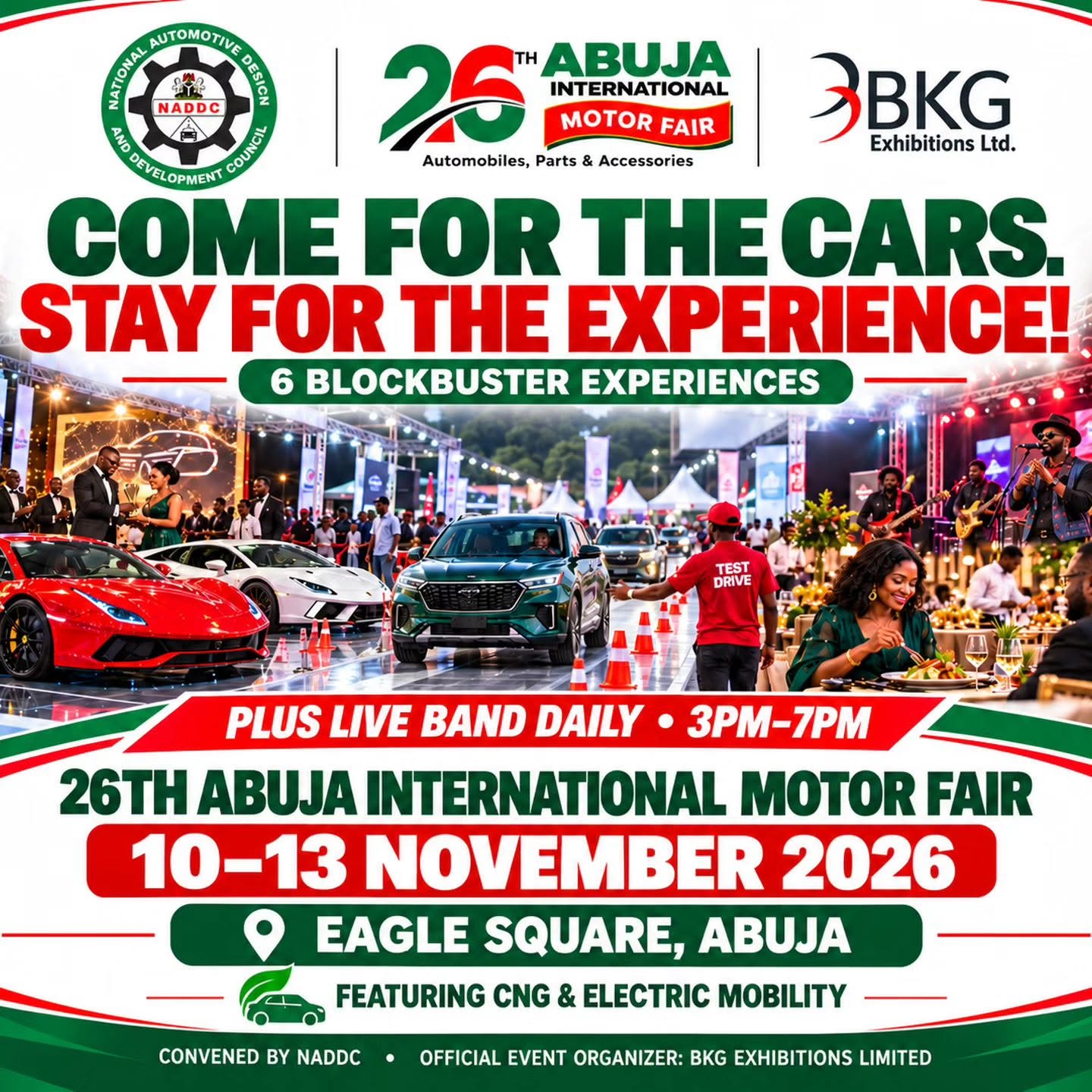
The 26th Abuja International Motor Fair will run at Eagle Square from 10–13 November 2026, bringing manufacturers, assemblers, component suppliers, financiers and mobility-technology providers together around local production, investment and the future of Nigeria’s automotive value chain.
Abuja is preparing to host the four-day motor fair as the Federal Government and industry organisers push for a shift from a market dominated by imported vehicles towards more domestic assembly, component manufacturing and automotive services.
The National Automotive Design and Development Council (NADDC) and BKG Exhibitions Limited are organising the event at Eagle Square under the latest officially announced theme, “Driving Nigeria’s Automotive Future.” The programme is positioned as both a consumer-facing vehicle showcase and a meeting point for manufacturers, distributors, investors, fleet operators, financial institutions and technology providers.
What organisers have confirmed
| Item | Confirmed information |
|---|---|
| Dates | 10–13 November 2026 |
| Venue | Eagle Square, Abuja |
| Organisers | BKG Exhibitions Limited with NADDC |
| Latest official theme | Driving Nigeria’s Automotive Future |
| Target participants | Manufacturers, assemblers, dealers, component producers, financiers, fleet owners, transport operators, investors, technology providers and public agencies |
| Commercial focus | Local production, components, investment, technology transfer, cleaner mobility and business-to-business connections |
At the 14 October joint press briefing in Abuja, NADDC Director-General Oluwemimo Osanipin said the fair should go beyond vehicle displays to promote local production, attract investment, encourage technology transfer and showcase Nigerian innovation. Voice of Nigeria reported the event details on 15 October, while the organiser’s event information also identifies Eagle Square and the 10–13 November dates.
Why the motor fair matters for Abuja businesses
For the capital’s economy, a major automotive exhibition creates opportunities beyond new-car sales. Dealers and fleet buyers can compare products and financing options in one location, while workshops, spare-parts businesses, logistics providers and technical-service companies can assess supplier relationships and emerging maintenance requirements.
The event should also generate short-term demand for hotels, restaurants, transport, event production, security and other business services around the Central Business District. Those effects depend on actual attendance and exhibitor activity; organisers have not published a verified economic-impact figure, so businesses should treat the fair as a commercial prospect rather than a guaranteed revenue outcome.
Local manufacturing beyond vehicle displays
The strongest business case for the fair is its focus on the wider automotive value chain. NADDC has highlighted vehicle assembly, component manufacturing, research, technical skills and investment in emerging technologies as priorities for the industry.
That agenda potentially opens conversations for Nigerian suppliers of seats, plastics, glass, tyres, batteries, cables, lubricants and other inputs. It also creates a forum for providers working in compressed natural gas conversion, electric mobility, charging systems, battery technology, digital manufacturing and vehicle diagnostics.
For investors, the practical test will be whether meetings at the fair develop into bankable supply contracts, distribution agreements, financing programmes or production partnerships. Announcements made during an exhibition should therefore be assessed against counterparties, timelines, funding and delivery milestones.
Commercial opportunities to watch
- Fleet procurement: corporate and government buyers may use the event to compare locally assembled and imported models, operating costs, warranties and after-sales coverage.
- Auto finance: banks and other financiers can test products for buyers, dealers and fleet operators, including repayment terms linked to commercial use.
- Component sourcing: assemblers and suppliers can explore local-content partnerships, quality requirements and production volumes.
- Cleaner mobility: electric-vehicle, battery, charging and CNG businesses can demonstrate solutions and identify infrastructure gaps.
- Aftermarket services: workshops, spare-parts distributors, training providers and diagnostic firms can assess demand created by newer vehicle platforms.
- Technology transfer: manufacturers and technical partners can discuss licensing, skills development and local production, subject to commercially verifiable agreements.
What businesses should verify before attending
Companies planning to exhibit or pursue partnerships should ask for the current exhibitor list, stand packages, meeting schedule and official contact details directly from the organiser. Fleet buyers should compare total cost of ownership—including fuel or energy use, parts availability, warranty coverage, maintenance skills and resale assumptions—rather than headline prices alone.
As of 24 October, the public materials reviewed by Abuja Business News did not provide a definitive final exhibitor list, ticket prices, daily opening hours or quantified investment commitments. Prospective visitors should confirm those details before making travel or procurement plans.
Related Reads
- FG launches trade intelligence tools for exporters in Abuja
- Layer3 opens ₦1.5bn commercial paper programme for cloud expansion
- Zeenab Foods opens Abuja supplier prequalification for commodities
Leave a Reply
You must be logged in to post a comment.