
A draft federal economic framework unveiled in Abuja would require major tax, tariff, subsidy and regulatory changes to pass formal impact tests—an attempt to reduce the policy shocks and reversals that businesses price into investment decisions.
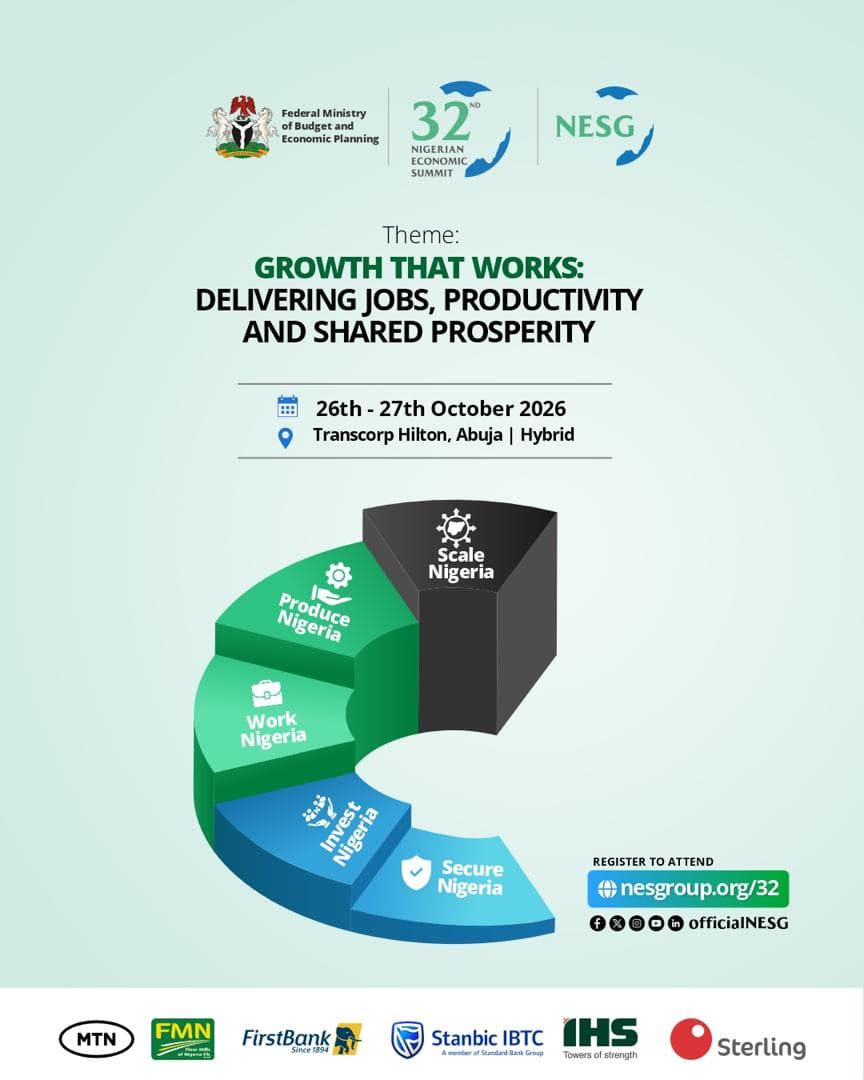
The Federal Government has proposed mandatory Policy Impact Assessments before major economic interventions, under a Nigeria Economic Policy Framework presented on Monday, 26 October 2026, at the 32nd Nigerian Economic Summit in Abuja.
Finance Minister and Coordinating Minister of the Economy Taiwo Oyedele said policymakers would have to identify the problem an intervention is meant to solve, the evidence behind it, who benefits, who bears the cost and the conditions under which the measure should end.
For investors and operators, that test could be consequential. Sudden changes to tariffs, taxes, subsidies and sector rules affect pricing, inventory, financing and expansion plans. Requiring government to publish its evidence and cost allocation could give firms a clearer basis for scenario planning and consultation before capital is committed.
Still a proposal, not approved policy
The framework remains a consultation draft. In an official notice, Oyedele said it is open for public scrutiny through 27 November 2026 across 17 core questions. Independent reports by TheCable, The Guardian and Punch confirmed the Abuja presentation and the proposed impact-assessment requirement.
Punch reported that the document is expected to proceed to the Federal Executive Council for approval and the National Economic Council for endorsement after consultation and validation. The government is also considering whether its principles should ultimately be backed by law.
That distinction matters: companies should not treat the draft as an immediate change to their current tax, tariff or investment obligations. Its commercial value will depend on the final text, the quality of implementation and whether regulators apply the same evidence standards consistently.
Tariffs, competition and local industry
Trade policy is one of the framework’s most direct business tests. Oyedele argued that tariffs should help domestic industries become competitive rather than protect inefficiency indefinitely. Punch reported that he favoured temporary, performance-based protection alongside better electricity, logistics and manufacturing competitiveness.
Manufacturers and import-dependent firms should watch how any final framework defines the duration, performance benchmarks and exit conditions for protective measures. A transparent timetable would help companies decide whether to localise inputs, build domestic capacity or maintain imported supply lines.
A scorecard businesses can test
The proposal also calls for an annual National Economic Scorecard, targeted for publication by Independence Day, tracking real wages, productive employment and poverty. That would broaden official performance measurement beyond headline GDP and give employers, lenders and investors additional indicators for demand, labour-market and consumer-risk decisions.
The NESG’s summit agenda similarly frames the next phase of reform around jobs, productivity, investment, regulatory efficiency and a stronger investment climate. The practical test is whether policy discipline lowers production costs and improves confidence—not simply whether a new framework is adopted.
What Abuja businesses should do now
- Review the 17 consultation questions and submit evidence on policies that raise operating or compliance costs.
- Quantify the effects of recent tariff, tax or regulatory changes using cash-flow, pricing, employment and investment data.
- Ask industry associations to propose measurable performance benchmarks and clear sunset clauses for sector support.
- Continue planning under existing rules until the framework passes the stated approval process.
Related Reads
- Customs Sets December Abuja Conferences for Digital Trade and Border Reform
- NSIA Awards $275,000 to Startups at Abuja Demo Day
- FG Launches Trade Intelligence Tools in Abuja to Help Exporters Find Global Markets
Leave a Reply
You must be logged in to post a comment.