
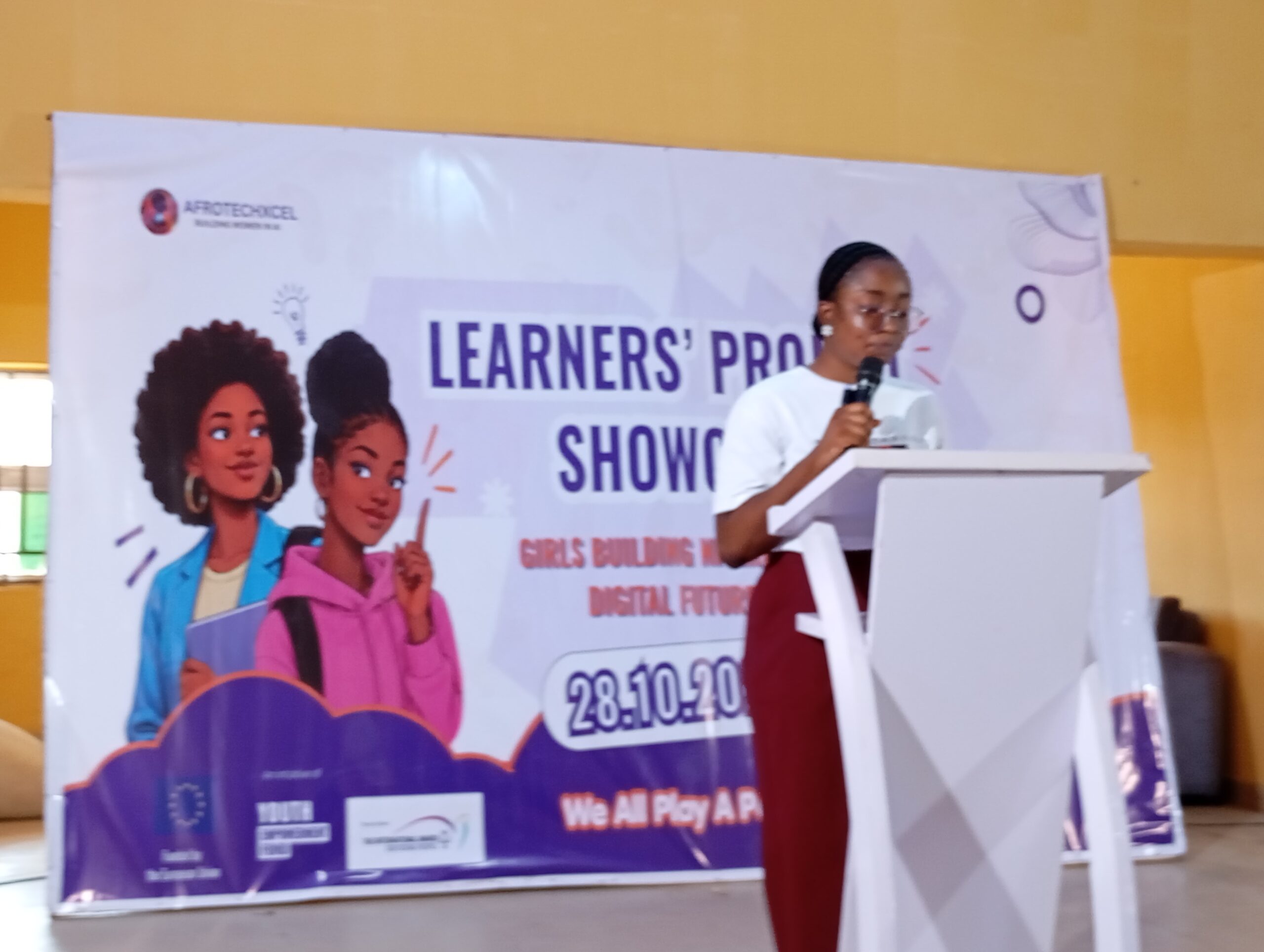
Abuja-based social enterprise AfroTechXcel says it is developing practical AI learning hubs in Lugbe and Mpape after an FCT school programme helped 772 girls move from introductory training to building and testing technology projects.
The planned facilities could add neighbourhood-level digital-skills infrastructure to Abuja’s technology ecosystem, while creating a new pipeline for internships, freelance work, entrepreneurship and early-stage product development.
AfroTechXcel announced the expansion at its AI for Her Showcase 2026, held on Wednesday, 28 October, at Model Secondary School, Maitama. The programme covered 16 government secondary schools in the Federal Capital Territory.
Leadership reported that the participants developed 755 technology projects spanning healthcare, digital safety, education, access to justice and civic engagement. The organisation told reporters that the learners had progressed to user testing, financial projections and adoption planning, with some projects being positioned for possible commercialisation.
From training to local technology infrastructure
The immediate business significance is not the training count alone. AfroTechXcel says it is building a facility in Lugbe first, with Mpape expected to follow. If completed, the hubs would give learners a physical base for practical digital education outside Abuja’s more established central business and innovation districts.
The organisation also says it is working with partners to create internships and practical work opportunities for women and girls who complete its programmes. Its stated pathways include entrepreneurship, freelancing, education and advocacy.
That approach matters because Abuja’s technology market needs more than short courses and certificates. Employers and clients require demonstrable skills, portfolios, product testing and supervised work experience. Connecting school-based learning to real assignments could help reduce the gap between training and income.
Projects designed around local problems
The Abuja Inquirer reported that more than one-third of the projects involved digital innovation, including AI classifiers, WhatsApp community bots and school registries. Other teams worked on health, safety, digital rights, flood alerts and agricultural tracking.
The initiative’s founder and executive director, Emerald Akhaumere, said learners completed 8,301 learning activities and received thousands of rounds of mentor feedback. These figures are programme-reported metrics and should be read as evidence supplied by the organiser rather than an independent impact audit.
NITDA Director-General Kashifu Inuwa, represented at the showcase by Oladejo Olawumi, director of IT infrastructure and solutions, encouraged participants to explore the agency’s innovation and entrepreneurship support programmes. He also stressed data protection, safeguarding and responsible technology development.
AfroTechXcel separately submitted a policy memorandum on child-centred AI education to NITDA and the FCT Secondary Education Board. Submission does not mean that either agency has adopted the proposal, but the engagement places the programme within a wider discussion about teacher preparation, affordable access and safe AI use in schools.
What Abuja businesses should watch
- Hub delivery: investors and partners should look for confirmed sites, opening dates, equipment, connectivity and operating capacity in Lugbe and Mpape.
- Internship quality: technology firms can support the talent pipeline with supervised placements, real briefs and measurable project outcomes.
- Commercial validation: student projects will need stronger evidence of demand, intellectual-property clarity, data safeguards and repeatable revenue models before attracting capital.
- Supplier opportunities: local providers of devices, connectivity, power backup, training services and workspace fit-out may benefit if the hub plan advances.
- Safeguarding: programmes involving minors must treat consent, privacy and responsible AI use as core operating requirements.
For Abuja’s business community, the strongest opportunity is to turn a visible pool of young technology talent into credible work experience and investable products. The decisive test will be whether the proposed hubs and partnership pipeline move from announcement to durable, properly governed operations.
Related Reads
- NESG launches Abuja bill tracker to help businesses monitor regulation
- BPP opens Abuja procurement training and portal support for MSMEs
- cyPHER programme targets women-led micro businesses in Abuja
Leave a Reply
You must be logged in to post a comment.