
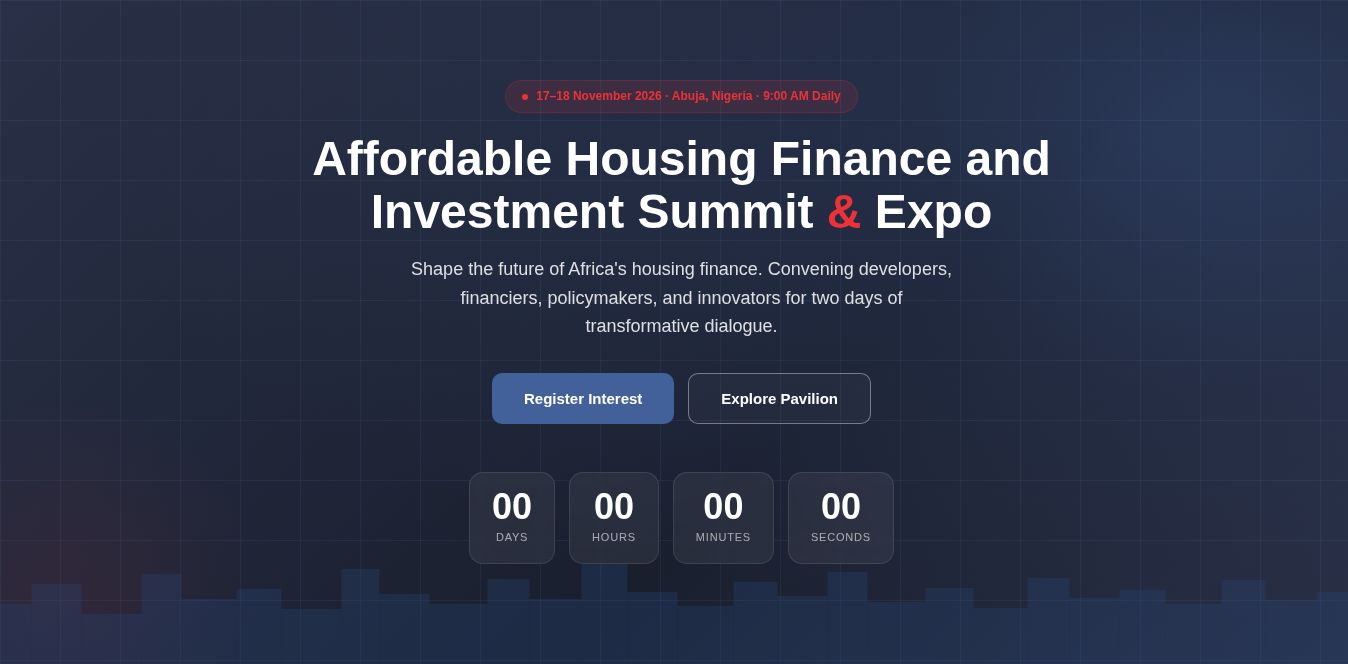
The ninth Affordable Housing Finance and Investment Summit and Expo opens in Abuja on 17 November, bringing developers, lenders, investors, government institutions and technology providers into a two-day discussion on how to move housing demand into financeable projects and sustainable homeownership.
AHFIS 2026 is scheduled for 17–18 November at the Shehu Musa Yar’Adua Centre in Abuja’s Central Business District. The organiser is positioning the summit around the theme “Housing is Finance: From Housing Finance to Home Ownership,” with digital finance for housing inclusivity and affordability as a sub-theme.
The official event platform lists more than 500 expected delegates, over 40 speakers and leaders, and participants from more than 12 sectors. Those are organiser targets rather than independently verified attendance figures, but the mix illustrates the commercial problem AHFIS is trying to address: Nigeria’s housing shortage cannot be solved by construction alone if developers lack patient capital, buyers cannot access affordable mortgages and projects cannot clear land, title, infrastructure and risk hurdles.
Mortgage, equity and credit enhancement move to the centre
The summit’s published focus areas include engineering, procurement and construction plus finance; mortgages; microfinance; equity financing; impact investment; digital banking; and guarantees or promissory-note structures.
For developers, these are not interchangeable funding tools. Mortgage capital depends on borrower eligibility, stable income, property valuation and the enforceability of security. Equity investors require governance, realistic returns and credible exit pathways. Guarantees can reduce lender risk, but only when their coverage, triggers and repayment obligations are clear. Microfinance may improve access for incremental building and home improvement, while large developments require longer-tenor institutional capital and dependable infrastructure.
The official participant presentation includes housing agencies, mortgage and commercial banks, developers, investment managers, professional bodies, technology firms and public institutions. The commercial value of the gathering will therefore depend on whether those organisations translate policy discussion into defined funding windows, transaction mandates, qualified project pipelines and clearer underwriting standards.
What Abuja developers and housing businesses should watch
Abuja’s real-estate market combines strong demand with high land, infrastructure and construction costs. Housing businesses attending AHFIS should look beyond headline commitments and test the terms that determine whether a project is genuinely bankable.
- Developers: prepare verified title documents, approvals, project budgets, sales evidence, infrastructure plans and phased cash-flow requirements before seeking capital.
- Mortgage and cooperative lenders: clarify borrower qualification, interest rates, tenor, deposit requirements, repayment collection and the process for dealing with arrears.
- Investors and fund managers: test land ownership, sponsor equity, governance, demand assumptions, cost-overrun protection and the route to liquidity.
- Construction and building-material suppliers: present measurable cost, quality, delivery and local-content advantages rather than relying on general capability statements.
- Proptech and fintech companies: demonstrate how their systems improve identity verification, contribution tracking, underwriting, payment collection, title records, construction monitoring or transaction transparency.
- Professional advisers: legal, valuation, insurance, quantity-surveying, environmental and transaction teams can support projects that need to become lender-ready.
Digital housing finance creates opportunity—and new due-diligence questions
Digital banking is one of the summit’s seven focus areas, and the Proppay real-estate financing ecosystem is being presented as a special launch feature. Abuja Business News has covered that platform separately; the broader significance is the increasing use of technology to organise buyer demand, contributions, mortgage origination and property transactions.
Digital platforms can reduce paperwork and improve visibility, but users and partners should still verify regulatory status, custody of customer funds, data protection, property and developer due diligence, dispute resolution, fees and the conditions governing refunds or withdrawals. A digital interface does not remove the underlying risks attached to land, construction, affordability and credit.
The investment test after the summit
AHFIS can concentrate market participants in one venue, but conferences do not automatically close Nigeria’s housing finance gap. The stronger outcomes would include named financing vehicles, transparent eligibility rules, published application windows, investible project data rooms, signed mandates and transaction timelines that businesses can track after the event.
Developers should distinguish between a policy proposal, a memorandum of understanding, a financing commitment and actual disbursement. Lenders should state whether announced products are operational and funded. Government agencies should explain how land, planning, infrastructure and title reforms will be implemented, because these costs and delays directly affect affordability.
The independent Visit Abuja listing says the summit combines an exhibition with sessions on financing models, land and title reform and the housing funding gap. It also advises attendees to confirm details with the organiser. The official agenda page currently says the programme is being finalised and labels its displayed agenda images as demo placeholders, so businesses should rely on confirmed event information and avoid treating provisional programme material as final.
Practical preparation for participants
Companies attending the summit should arrive with a concise transaction objective: a funding request, mortgage partnership, technology pilot, supplier qualification, investment mandate or development consortium. A short capability statement should be supported by project evidence, licences and approvals, financial requirements, proposed risk allocation and the specific decision-maker the company needs to meet.
The event runs from 17–18 November 2026, with the official site stating a 9:00 a.m. daily start. Because speaker schedules and detailed sessions may change, participants should confirm the current programme through the organiser’s official channels before travelling.
Related Reads
- Proppay Housing Finance Platform Set for Abuja Launch at AHFIS
- Housing Ministry Proposes ₦1tn FMBN Recapitalisation at Abuja Roundtable
- APDC: Infrastructure Accounts for Up to 40% of Abuja Housing Cost
Leave a Reply
You must be logged in to post a comment.