
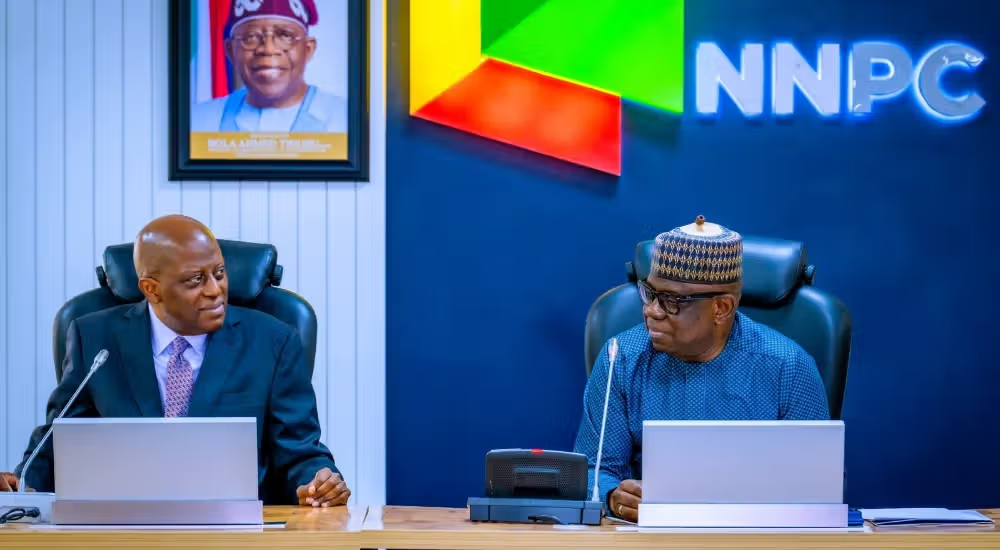
The Central Bank of Nigeria and NNPC Limited have signed a new cooperation agreement in Abuja that links oil-and-gas revenue management, foreign-exchange inflows, energy financing, payment automation and regulatory coordination.
The memorandum of understanding was signed on Wednesday, 18 November 2026, at the CBN headquarters by Governor Olayemi Cardoso and NNPC Group Chief Executive Officer Bayo Ojulari. The institutions say it replaces a largely ad hoc working relationship with a structured framework supported by joint steering and working committees.
For businesses, the importance of the agreement lies in implementation rather than the ceremony. Nigeria’s oil and gas earnings remain central to fiscal revenue, external reserves and foreign-exchange supply. More predictable collection, settlement and repatriation of export proceeds could improve planning conditions for companies whose costs, debts or supplier contracts are denominated in foreign currency.
What the CBN–NNPC agreement covers
Statements issued after the signing identify several workstreams: management and settlement of oil and gas proceeds; international trade and foreign-exchange flows; energy financing and hydrocarbon monetisation; payment automation; treasury-system integration; regulatory alignment; cybersecurity; risk management; and institutional information sharing.
Cardoso said the central bank’s role as custodian of NNPC’s key operational foreign-currency accounts makes timely and transparent settlement of petroleum proceeds into the Federation Account and other designated accounts important to monetary stability.
Ojulari said a formal structure had become more important following NNPC’s transition into a commercially driven company under the Petroleum Industry Act. He also linked the agreement to the company’s ability to raise capital against its assets and balance sheet, align contractor settlements and foreign-exchange conversions with CBN policy, and pursue oil and gas development.
Energy finance is the commercial opportunity
The agreement gives the CBN a stated role in convening international financial institutions and helping develop financing structures for natural-gas projects. That could create mandates for banks, investment advisers, law firms, insurers, engineering companies and technical consultants if specific projects reach bankable status.
It does not, however, announce a financing facility, approved project list or committed capital amount. Companies should distinguish an institutional framework from a funded transaction. The next meaningful signals will be named assets, financing terms, procurement routes, approvals, timelines and risk allocation.
NNPC officials also connected the partnership to the company’s ambition to raise crude production from about 1.8 million barrels per day to three million barrels per day and unlock more gas resources. Those targets remain operational ambitions, not guaranteed outcomes of the MoU.
Why FX coordination matters to companies
Oil export receipts are a major source of foreign currency for Nigeria. When inflows are delayed, difficult to track or poorly coordinated, the effects can reach importers, manufacturers, airlines, energy companies and service businesses through exchange-rate volatility, restricted liquidity and higher hedging costs.
Better coordination between the institutions could support more predictable settlement and reporting. It will not by itself remove foreign-exchange risk or guarantee a particular naira rate. Global oil prices, production volumes, export reliability, debt obligations, import demand and monetary policy will continue to shape market conditions.
Payment automation and technology contracts
The planned integration of CBN and NNPC treasury processes could generate demand for payment infrastructure, systems integration, audit controls, cybersecurity, data governance and operational-resilience services. Abuja-based technology vendors and professional advisers may find opportunities where procurement is opened and qualification requirements are published.
These systems will handle financially sensitive information and high-value transactions. Vendors should expect demanding requirements covering identity and access management, encryption, transaction monitoring, business continuity, incident response, audit trails and regulatory reporting.
Practical implications for Abuja businesses
- Banks and advisers: monitor for gas-financing structures, asset-monetisation mandates and capital-raising transactions rather than treating the MoU itself as a financing commitment.
- Energy contractors: prepare verifiable technical capacity, local-content records, safety credentials and project-finance documentation ahead of any formal procurement.
- Technology providers: track opportunities in payment automation, treasury integration, cybersecurity, compliance systems and data exchange.
- Import-dependent companies: continue to manage currency exposure; institutional coordination does not eliminate FX volatility.
- Investors: look for published implementation indicators, audited revenue flows, project-level economics and governance arrangements.
- Professional firms: potential work may include transaction structuring, regulatory advice, risk management, intellectual property, tax, insurance and dispute provisions.
The implementation test
The institutions say joint steering and working committees will monitor agreed performance indicators. Neither the full MoU nor a detailed implementation timetable was publicly available in the reviewed announcements.
Commercial confidence will depend on measurable outcomes: faster and more transparent settlement of export proceeds, stronger reserve inflows, bankable energy projects, reliable payment systems and clear accountability. Until those results appear, the agreement should be read as a governance framework with significant potential, not proof that financing or production targets have been achieved.
Related Reads
- NIPITECS Opens Abuja Pipeline Finance Talks as Operators Seek Capital
- Africa Energy Bank Formally Established in Abuja With $5bn Authorised Capital
- FCTA Reviews $1.5bn E-Mobility Proposal for Abuja Transport
Sources
- Joint CBN–NNPC announcement reproduced by The Preview, 18 November 2026.
- Reuters — Nigeria’s central bank and NNPC sign energy-funding agreement, 18 November 2026.
- TheCable — CBN, NNPC sign MoU to strengthen FX inflows and energy financing, 18 November 2026.
- Punch — CBN, NNPC sign deal to strengthen oversight of oil revenues, 18 November 2026.
Leave a Reply
You must be logged in to post a comment.