
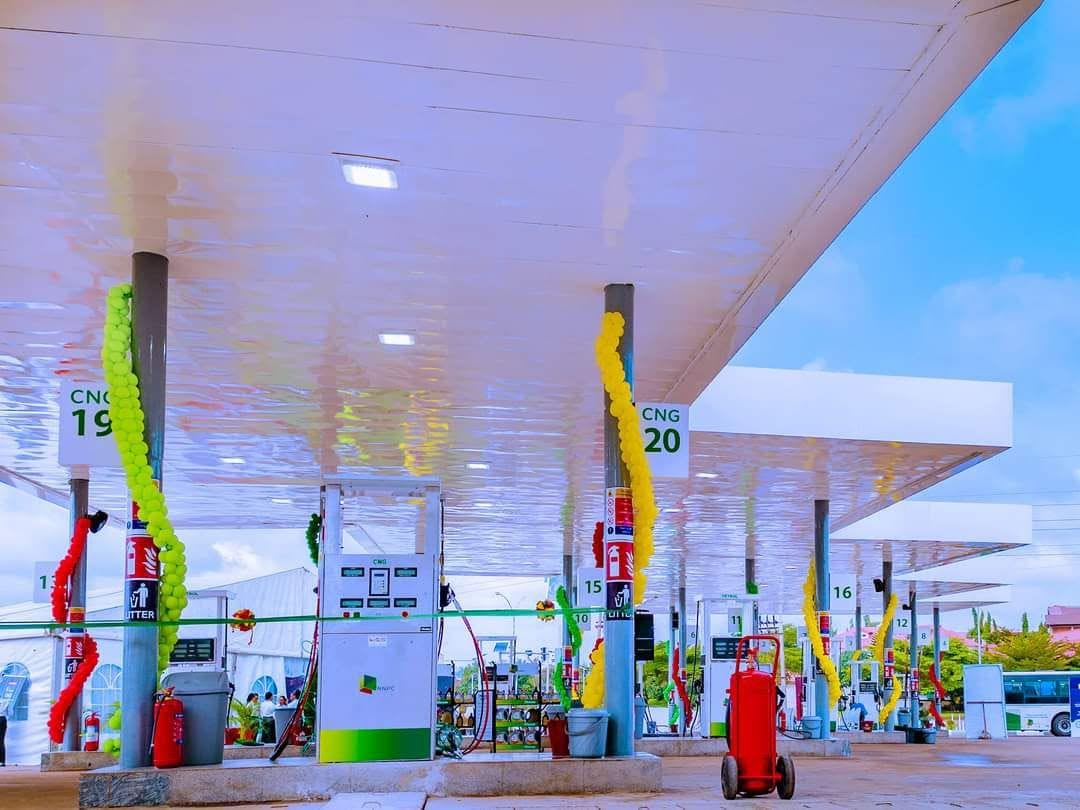
NNPC Limited, Barama Energy Resources and Defence Headquarters commissioned a compressed natural gas (CNG) refuelling station in Abuja on Friday, 27 November 2026. The facility is intended to serve both institutional and civilian customers, adding a new outlet to the capital’s alternative-fuel market and providing a practical test of whether the emerging CNG network can support commercial fleet operators.
The opening was reported by The Nation and The Guardian on 27 November and by PUNCH and BusinessDay on 28 November. Barama Energy chief executive Dipo Jimoh and NNPC representative Ibrahim Ahmed addressed the commissioning, confirming the partnership and outlining its proposed expansion. The announcement marks a completed facility opening, not merely an agreement to develop one.
From project delivery to fuel retail
Barama delivered the station in collaboration with NNPC and Defence Headquarters. Ahmed, who represented NNPC’s group chief executive, said NNPC Retail would take responsibility for running and maintaining the facility. Jimoh described the intended service as round-the-clock and acknowledged regulatory approvals from the Nigerian Midstream and Downstream Petroleum Regulatory Authority.
The statements establish the announced operating arrangement. They do not establish actual fuel sales, continuous availability, retail prices or conditions for civilian access. Commercial drivers should confirm those details directly with the operator before relying on the station.
A CNG daughter station receives gas from a separate supply point, rather than necessarily having an independent pipeline supply. This makes the economics of gas delivery, reliable replenishment, retail pricing and customer demand central to its commercial performance.
Why this matters to Abuja businesses
Abuja’s alternative-fuel market already includes other providers. Earlier this month, Abuja Business News reported the opening of Rolling Energy’s Karu station. The new Barama–NNPC facility is a separate development and should not be described as Abuja’s first CNG outlet.
For taxi operators, delivery businesses, staff-transport providers and other fleet owners, additional retail outlets could improve the case for switching compatible vehicles to gas. The business case still depends on the total cost of vehicle acquisition or conversion, fuel cost per kilometre, refuelling detours, insurance, servicing and vehicle downtime.
For local service providers, more stations could support demand for compliant vehicle maintenance, driver training, fleet-management software and professional inspection services. These are potential market effects; the commissioning did not establish an open supplier tender or new recruitment programme.
Further expansion remains conditional
The parties also described plans to extend the partnership and discussed another integrated energy retail project in Abuja. No firm construction schedule, investment budget or public procurement opportunity for that additional project was established in the reporting reviewed.
Cost-reduction estimates discussed at the ceremony are projections, not measured savings achieved by the newly opened facility. Actual savings will differ according to vehicle type, route profile, fuel availability and conversion costs.
What fleet operators should assess
- Fuel access: confirm retail availability, price, opening arrangements and the ability to refuel commercial vehicles before committing to regular routes.
- Conversion economics: compare written quotations from qualified conversion providers with actual fuel expenditure and the remaining useful life of each vehicle.
- Operating standards: verify applicable approvals, insurance coverage, service support and inspection requirements.
- Procurement: suppliers should monitor formal announcements by the project partners rather than treat proposed expansion as a confirmed contract pipeline.
The commercial significance of the opening is that it adds physical fuel infrastructure to Abuja. Its wider impact will be determined by dependable civilian service, transparent pricing and evidence that businesses can sustain a lower total cost of transport.
Related Reads
- Rolling Energy Opens Karu CNG Station with 150-Vehicle Daily Capacity
- Quickfill Energies Opens New Corporate Head Office in Abuja
- NNPC Retail Opens Smart Self-Service Station in Abuja
Sources
- The Nation — commissioning report and remarks by the project partners, 27 November 2026
- The Guardian — station commissioning and operating arrangements, 27 November 2026
- PUNCH — opening and partner statements, 28 November 2026
- BusinessDay — operator and expansion plans, 28 November 2026
- NNPC — official September 2026 retail expansion release (background, not the November opening)
Leave a Reply
You must be logged in to post a comment.