
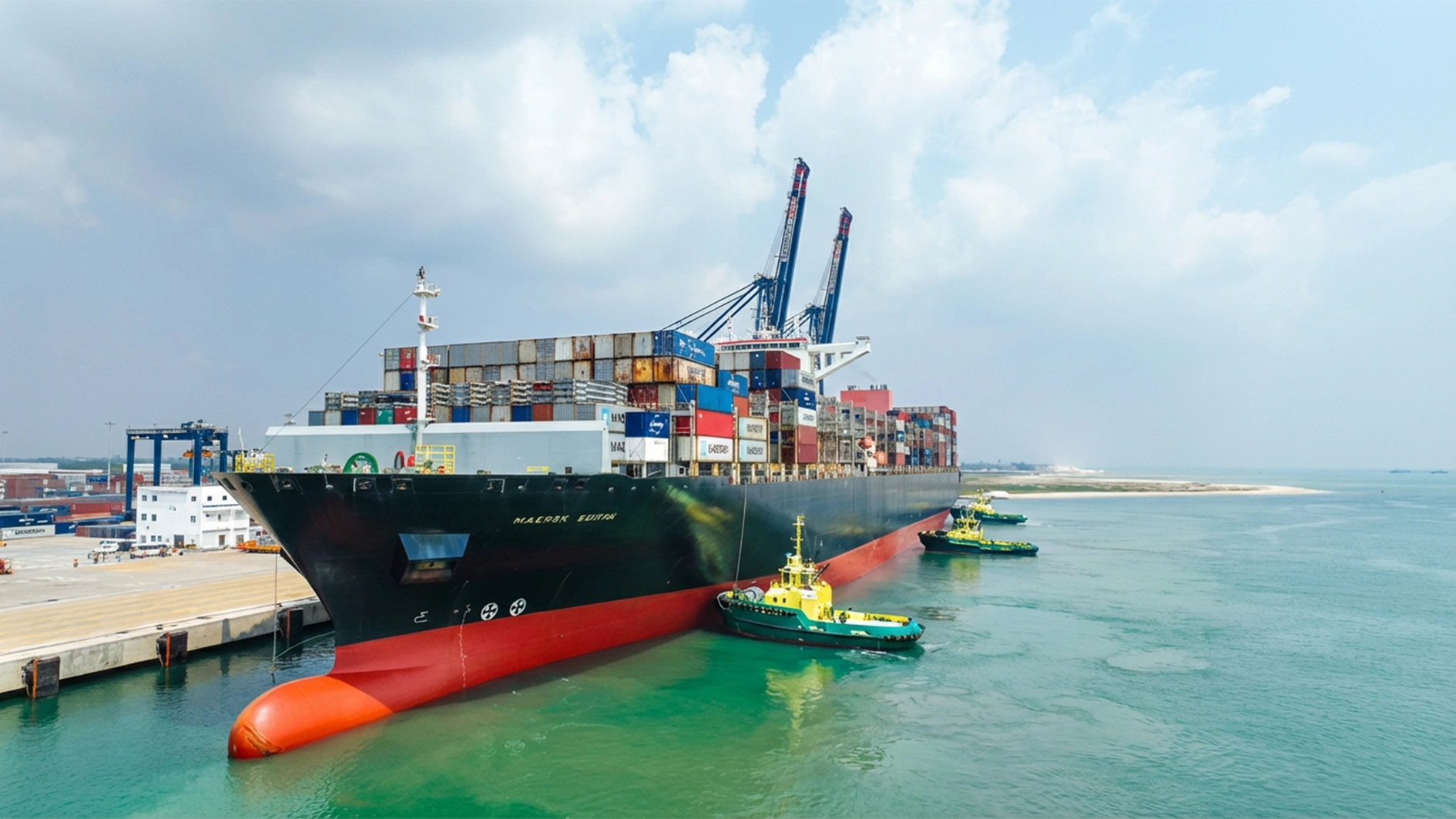

The Nigerian Ports Authority says new control of Inland Dry Ports and dedicated Export Processing Terminals will bring key clearance, documentation and cargo-preparation functions closer to exporters in Abuja and other inland markets—potentially reducing avoidable journeys to coastal ports before goods are ready to ship.
NPA Managing Director Abubakar Dantsoho outlined the plan during the authority’s special day at the 21st Abuja International Trade Fair. He said the agency was expanding export channels, improving cargo processing and connecting maritime logistics more closely with producers and businesses outside Nigeria’s coastal states.
The announcement has a direct commercial angle for businesses in the Federal Capital Territory. Abuja is not a port city, but it is a coordination centre for agricultural exporters, manufacturers, mining companies, logistics providers, banks, trade associations and government agencies serving Nigeria’s northern and central production corridors.
What is changing in the export chain
Dantsoho said the Federal Government recently approved the transfer of Inland Dry Port management and development functions to the NPA. The stated objective is to allow exporters operating far from the coast to complete more port-related processes closer to where their goods originate.
The NPA has also operationalised Export Processing Terminals intended to function as one-stop centres for sorting, packaging, quality certification and customs documentation before export cargo moves to a seaport terminal.
For a properly prepared exporter, that model could reduce duplicated handling, documentation delays and the cost of moving unprocessed cargo back and forth between inland locations and coastal ports. It could also improve shipment predictability—a key requirement for foreign buyers purchasing agricultural commodities, processed foods, solid minerals or manufactured goods.
The important limit Abuja exporters should understand
The policy should not be mistaken for an operational dry port inside Abuja. BusinessDay reported on 5 October that only three of Nigeria’s seven Inland Dry Ports—located in Kaduna, Kano and Katsina—were active at the time of reporting.
Abuja-based businesses therefore need to verify which facility can actually handle their product, the applicable charges, inspection and certification requirements, rail or road connections, container availability and the final route to the seaport. A policy announcement becomes commercially useful only when exporters can access a reliable service with measurable improvements in time and cost.
Who could benefit
- Agro-processors and commodity exporters: particularly businesses handling sesame, cashew, hibiscus, cocoa and other products that require grading, packaging and certification.
- Solid-mineral companies: faster inland documentation could simplify export preparation for properly licensed and traceable shipments.
- Manufacturers: more predictable logistics may help firms quote delivery dates and landed costs more confidently to overseas buyers.
- Freight forwarders and logistics SMEs: inland consolidation creates demand for compliant warehousing, haulage, container handling and documentation support.
- Banks and trade-finance providers: clearer shipment processes can support letters of credit, export financing and foreign-exchange repatriation.
What Abuja businesses should prepare now
- Confirm the correct product classification, export licence and regulator for the goods.
- Document the supply chain, origin, quality controls and production capacity before approaching foreign buyers.
- Obtain written quotations covering inland handling, certification, haulage, terminal charges and seaport costs.
- Verify packaging, labelling and destination-market standards before cargo is consolidated.
- Agree payment, insurance and foreign-exchange terms with a bank experienced in trade finance.
- Ask the NPA, Nigerian Export Promotion Council and Abuja Chamber of Commerce for the current operating route—not merely the announced policy framework.
ABN analysis: execution will determine the benefit
The NPA’s inland-processing push addresses a real constraint for businesses located hundreds of kilometres from Nigeria’s seaports. Bringing documentation and cargo preparation closer to producers could widen Abuja’s role as a trade-services hub for northern and central Nigeria.
The test is implementation. Exporters need published service standards, transparent tariffs, dependable inspection schedules, interoperable digital documentation and secure connections between dry ports, processing terminals and seaports. Without those elements, administrative responsibility may shift while the underlying delays remain.
For Abuja businesses, the practical opportunity is to become export-ready before demand arrives: standardise products, build traceability, understand total logistics costs and establish relationships with verified buyers and service providers. Companies that do that work early will be better positioned to use the new infrastructure as it becomes operational.
Related Reads
- Africa–Bangladesh Trade Summit Set for Abuja With 500+ B2B Meetings Planned
- Dangote Pushes Local Supply Chains at Abuja Trade Fair
- BOI Launches MyBOI Digital Portal as Abuja Lecture Pushes Long-Term Capital
Leave a Reply
You must be logged in to post a comment.