
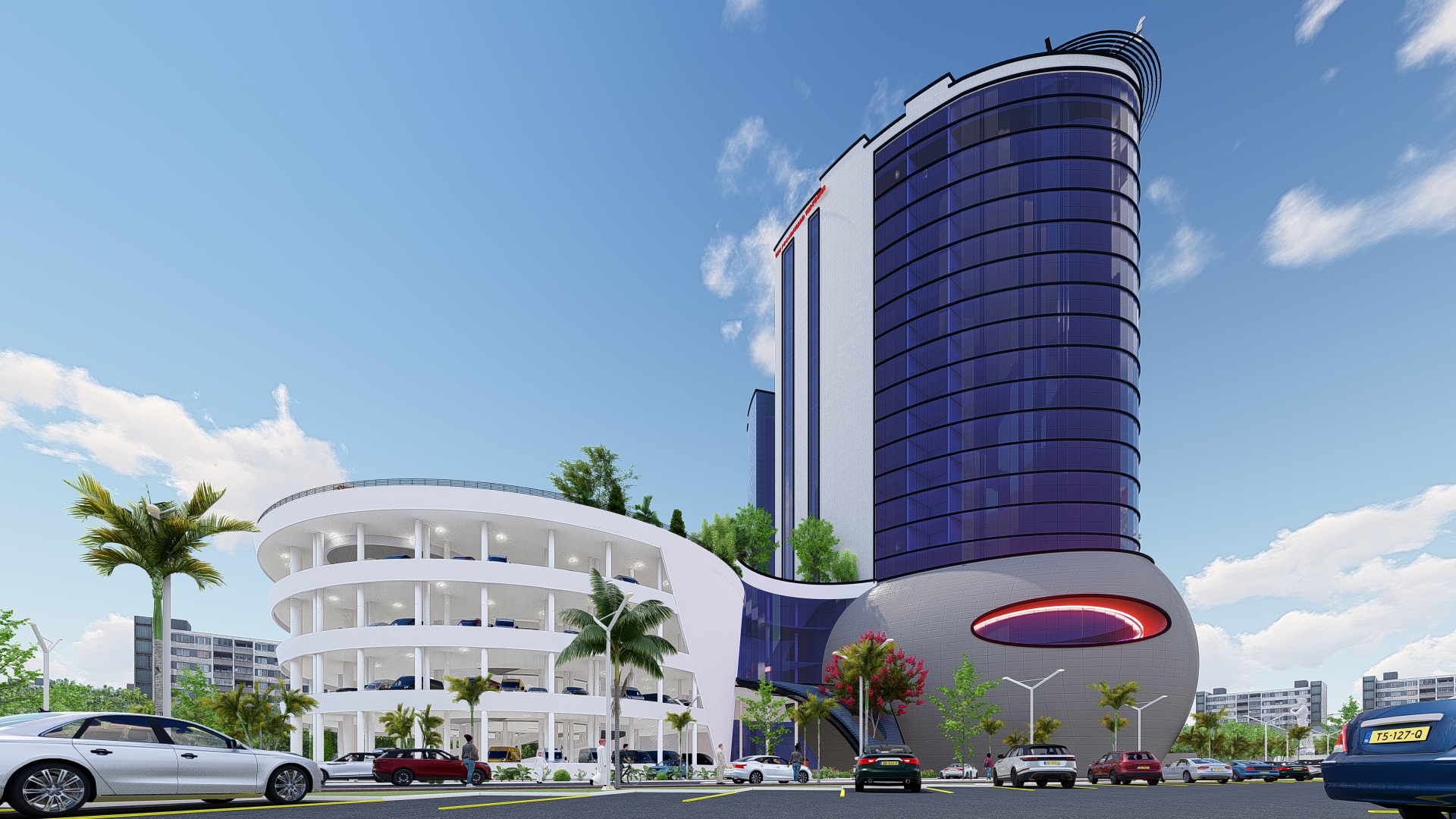
PromiseLand Estate has announced a mixed-use high-rise for Abuja’s Central Business District, positioning the proposed Tri Tower as a residential, hospitality, retail and business destination. The project could create opportunities across construction, facilities management and short-let operations, but material discrepancies in the developer’s public specifications and the absence of disclosed financing or delivery dates require careful investor scrutiny.
A proposed vertical destination in Abuja’s commercial core
PromiseLand Estate is proposing Tri Tower for a site in Abuja’s Central Business District, opposite Silverbird Cinema. The company’s chief executive, Lawrence Emmanuel, said the development is intended to combine luxury accommodation, commercial activity and lifestyle services within one high-rise complex.
BusinessDay reported on 12 October that the company describes the scheme as a 22-storey mixed-use development. Other coverage lists serviced studio, one- and two-bedroom apartments, four-bedroom penthouses, commercial space, retail outlets, restaurants and lounges, entertainment areas, a swimming pool, gym, wellness centre and smart-building systems.
If delivered, that mix would place Tri Tower in the same emerging class of Abuja projects designed to capture several income streams under one roof: long-term residential rent, serviced accommodation, food and beverage spending, retail traffic and corporate tenancy.
Where the business opportunity lies
The Central Business District location is the core of the commercial proposition. Proximity to offices, public institutions, hotels and transport corridors can support demand from executives, professional-service firms, visitors and organisations seeking centrally located accommodation or workspace.
For local businesses, a project of this scale could generate contracts for design, construction, engineering, fit-out, security, cleaning, technology, utilities support and property management. After completion, restaurants, shops and serviced-apartment operators would depend on sustained occupancy and customer traffic rather than the building’s profile alone.
The mixed-use model can diversify revenue, but it also increases operating complexity. Residential owners, short-let guests, office tenants and public-facing retail users have different service, access and maintenance requirements. The commercial outcome will therefore depend on professional management, reliable utilities, disciplined service-charge administration and the ability to convert premium positioning into repeat demand.
Specifications do not yet align
A significant point remains unresolved. PromiseLand’s official project page says Tri Tower will rise “over 15 floors” and lists studio, two-bedroom and three-bedroom apartments. The company’s October announcement, as reported by BusinessDay and The Guardian, describes a 22-storey tower with studios, one- and two-bedroom apartments and four-bedroom penthouses.
The official page also states that the project is backed by an FCDA Certificate of Occupancy. That is a developer claim, not a substitute for an independent title search or verification of development approvals.
No public disclosure reviewed by Abuja Business News sets out the project’s investment value, financing structure, construction start, completion timetable, main contractor, pricing, presale status or approved unit schedule. The announced rental and short-let opportunities should consequently be treated as a proposed business model, not a guaranteed return.
What prospective buyers and partners should verify
Before committing funds, prospective buyers, tenants, contractors and business partners should request the current approved architectural drawings, development permit, exact floor and unit schedule, land-title documentation and evidence of the claimed FCDA Certificate of Occupancy. They should also establish the project company, payment and escrow arrangements, construction milestones, completion remedies, service-charge assumptions and the operator responsible for hospitality and facility management.
Independent legal and technical due diligence is especially important where marketing materials contain inconsistent specifications. Investors assessing rental income should test expected occupancy, achievable rents, furnishing and management costs, taxes, maintenance, utilities and resale liquidity rather than relying on gross-return illustrations.
Ripples Nigeria noted that the project’s prospects will depend on execution, pricing and the depth of demand across its different uses. That is the central commercial test: an ambitious skyline addition can expand Abuja’s premium property supply, but its value will ultimately be measured by approvals, financing, delivery and sustainable occupancy.
Related Reads
- Periwinkle Empire Enters Abuja With Planned $150m Royalties Tower
- S&P Global Energy Opens Abuja Office, Deepens West Africa Market Intelligence Push
- AICL Begins 140-Shop Kado Market Commercial Complex With 108-Space Multi-Level Car Park
Leave a Reply
You must be logged in to post a comment.