
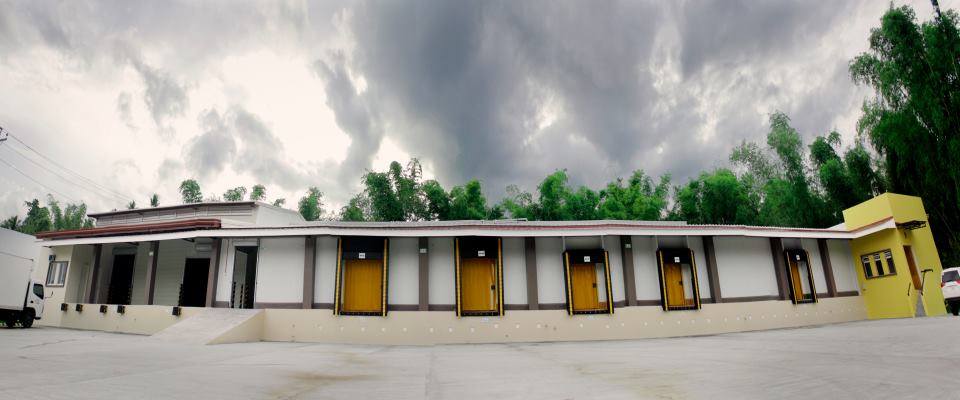
Nigeria’s new federal investment pipeline lists a $105 million agro-processing and cold-chain hub in Giri, Abuja, giving the Federal Capital Territory a sizeable agriculture-infrastructure proposition aimed at private capital.
The Projects Nigeria portal identifies the proposal as the Giri Agro-Processing Hub, sponsored by the Ministry of Finance Incorporated with Integrainium Processing. It states a total capital requirement of $105 million and a $55 million Phase 1 investment ask.
The figures describe capital being sought, not money already committed. The listing therefore signals an investible proposition entering the market rather than a completed financing, construction award or operational launch.
What the Giri investment listing says
The Giri project appears among 65 opportunities presented through the Federal Ministry of Finance’s Projects Nigeria platform. The full portfolio carries a stated capital requirement of $78.5 billion and spans energy, transport, manufacturing, mining, agriculture, technology, healthcare and urban services.
The official portal places the Giri hub in the agriculture and agro-processing category and names MOFI and Integrainium Processing as sponsors. Independent reports by Nairametrics and Punch also identify the Abuja proposal as a $105 million agro-processing and cold-chain export hub.
The broader programme was presented to investors around the 2026 IMF–World Bank Annual Meetings in Bangkok. According to the Finance Ministry’s platform, interested investors can examine sponsor, financing and project information through the pipeline and associated deal-room process.
Why the project could matter for Abuja businesses
If financed and executed, a processing and cold-chain hub in Giri could add industrial capacity to an Abuja economy dominated by administration, services, construction and consumption. Cold storage and processing can extend the commercial life of perishable produce, support more predictable supply and create room for local value addition before products reach retailers, hotels, restaurants or export channels.
The opportunity is wider than the core facility. A functioning hub would require aggregation, refrigerated transport, packaging, quality assurance, maintenance, cleaning, security, insurance, payments, inventory technology and energy services. It could also create new commercial routes for farmers and cooperatives supplying the FCT from neighbouring production belts.
For logistics operators, the proposition is particularly relevant because cold-chain economics depend on reliable movement between farms, storage, processing and final buyers. Abuja’s emerging cargo infrastructure, including the customs-licensed bonded warehouse opened in Kuje, could become complementary if the hub ultimately serves export-oriented businesses.
What the $105 million figure does — and does not — mean
The portal separates the project’s $105 million total capital requirement from a $55 million Phase 1 ask. That distinction suggests staged financing, but the public listing does not disclose a financial-close date, construction timetable, operating capacity, detailed crop mix, investor returns, tariff structure or confirmed offtake agreements.
The Finance Ministry also cautions that publication on Projects Nigeria does not guarantee project performance, financing, returns or transaction completion. Businesses should therefore treat the listing as an invitation for due diligence rather than evidence that procurement, funding or construction has begun.
The most important next milestones will be the financing structure, sponsor equity, land and planning approvals, environmental clearances, utility arrangements, technical partners and credible commitments from buyers and produce suppliers.
Practical implications for investors and suppliers
- Investors: verify the proposed transaction structure, ownership, security package, foreign-exchange exposure and assumptions behind projected cash flows.
- Farmers and aggregators: look for transparent quality standards, delivery schedules, pricing formulas and payment terms before committing supply.
- Cold-chain operators: assess energy reliability, backup-power costs, refrigeration technology, maintenance support and expected utilisation.
- Packaging and logistics firms: prepare evidence of food-grade compliance, traceability, fleet capability and service-level performance.
- Construction and equipment suppliers: rely only on authorised procurement notices and verified sponsor channels; a project listing is not a tender award.
- Abuja SMEs: watch for subcontracting and service opportunities, but avoid advance payments or informal “facilitation” requests not tied to official documentation.
Commercial outlook
The Giri proposal is notable because it puts an Abuja-based productive asset—not merely a conference or policy pledge—inside a national pipeline being marketed to capital providers. Its business impact, however, will depend on whether sponsors convert the Phase 1 ask into committed funding and publish enough operational detail for suppliers, lenders and offtakers to evaluate participation.
For Abuja’s business community, the near-term task is to monitor financing and procurement milestones. The larger opportunity is the possibility of a new agro-industrial cluster linking the capital’s consumer market and logistics network to food production, processing and export activity.
Related Reads
- AGROMEQA Expo Brings Agritech Investment and Export Focus to Abuja
- TRÏNŪ Opens 700-Container Bonded Warehouse in Kuje, Expands Abuja Cargo Clearance
- SciBiz 2026 Opens in Abuja With Research-to-Market Focus
Leave a Reply
You must be logged in to post a comment.