
Property values in Guzape I and II rose by an estimated 20–30 per cent in the first half of 2026, while Abuja commercial rents increased by more than 10 per cent, according to new Knight Frank Nigeria research pointing to a market driven by diaspora capital, constrained prime-district supply and demand for better-managed office space.
The figures place Abuja’s real estate market in a selective growth phase rather than a citywide boom. Gains are concentrating in emerging districts and quality commercial assets, while affordability and operating costs continue to limit the depth of demand.
Knight Frank’s H1 2026 market update, released this week, covers Lagos, Abuja and Port Harcourt. Its Abuja findings show investors and occupiers moving beyond saturated prime districts such as Maitama, Asokoro and Wuse 2, creating room for regeneration and new supply elsewhere in the capital.
The Abuja numbers
| Indicator | H1 2026 signal | Business implication |
|---|---|---|
| Guzape I and II property values | Estimated increase of 20–30% | Developers and landowners may see stronger pricing power, but buyers need transaction-level verification |
| Abuja commercial rents | More than 10% increase | Higher occupancy costs strengthen the case for flexible leases, efficient buildings and professional facilities management |
| Diaspora participation | 70–80% of sales for some developers | Demand is materially exposed to foreign-income buyers, remittance conditions and confidence in title and delivery |
The 20–30 per cent Guzape figure is a Knight Frank market estimate, not a government price index or a record of every completed transaction. Actual values vary by title, access road, building quality, development stage, infrastructure and seller terms.
Why Guzape is gaining attention
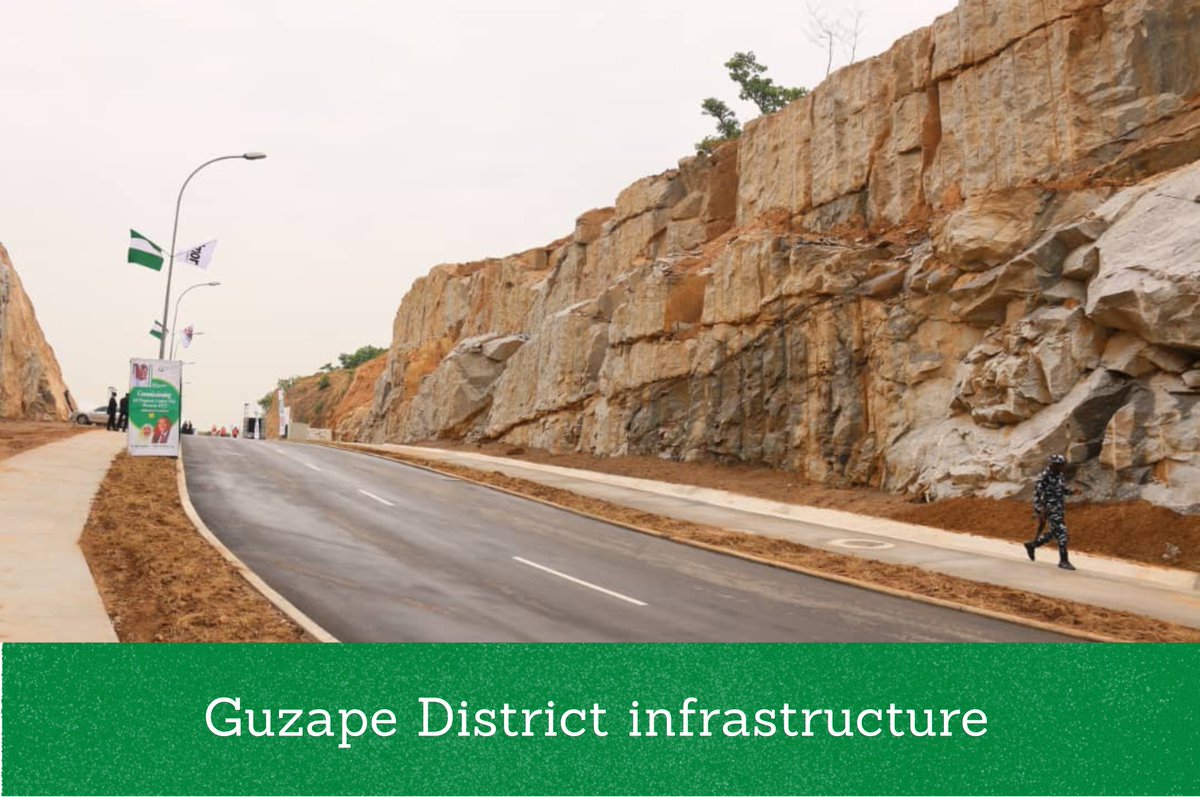
Guzape sits close to established high-value districts but still offers more room for development than Abuja’s most mature neighbourhoods. Road and infrastructure expansion has helped turn the district into a premium residential and mixed-use corridor, while new estates and apartment projects are widening the supply base.
That positioning attracts buyers looking for access to the city centre without competing for increasingly scarce stock in Maitama, Asokoro or Wuse 2. It also gives developers an opportunity to sell newer layouts, gated-community services and modern building systems at premium prices.
The risk is that advertised appreciation can run ahead of completed-sale evidence. Investors should test asking prices against registered transactions where available, confirm land title and planning approvals, and examine the cost of roads, power, water, security and service charges before treating headline growth as a realised return.
Office tenants are paying for functionality
Commercial rents in Abuja increased by more than 10 per cent during the first half, according to the report. Newer buildings are adding space, but demand is becoming more discriminating: tenants increasingly prioritise reliable electricity, lifts, parking, security and professional facilities management.
For landlords, this means a higher rent is more defensible when the building reduces operational friction. Older office properties that cannot meet these expectations may need refurbishment, flexible lease structures or lower effective rents to remain competitive.
For companies taking space, the headline rent is only one part of the occupancy decision. Power costs, backup systems, maintenance standards, access, parking, fit-out obligations and service-charge governance can materially change the total cost of operating from a building.
What investors and businesses should do
- Verify appreciation claims: request comparable completed transactions, not only asking prices or developer projections.
- Check title and approvals: confirm ownership, development control approvals and any infrastructure obligations before committing capital.
- Model total occupancy cost: include service charges, backup power, maintenance and fit-out—not rent alone.
- Stress-test diaspora demand: projects heavily dependent on foreign-income buyers should account for exchange-rate, remittance and confidence risks.
- Prioritise asset quality: reliable utilities and facilities management are becoming commercial differentiators in Abuja’s office market.
The broader message is that Abuja property is not moving uniformly. Emerging districts such as Guzape may continue to outperform, but returns will depend on infrastructure delivery, legal certainty, build quality and the depth of real demand. For commercial property, functionality is increasingly determining which assets can sustain rent growth.
Related Reads
- PromiseLand Proposes 22-Storey Tri Tower for Abuja CBD
- Periwinkle Empire Enters Abuja With Planned $150m Royalties Tower
- Dei-Dei Ultra-Modern Market Phase Two Expands Abuja Commercial Corridor
Leave a Reply
You must be logged in to post a comment.