
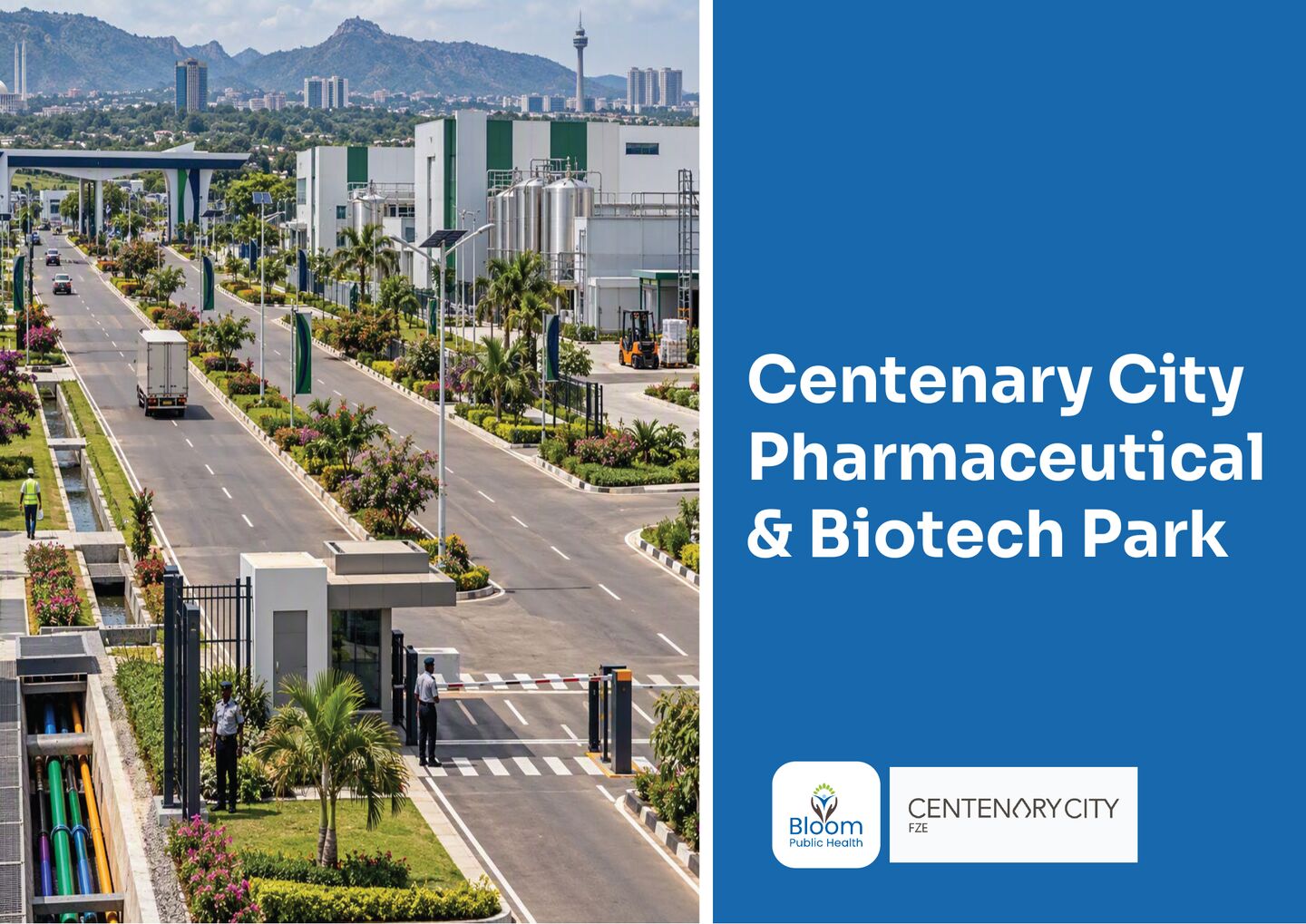
Bloom Public Health and Centenary City are developing a pharmaceutical and biotechnology industrial park on more than 30 hectares in Abuja, offering manufacturers shared utilities, GMP-oriented technical support and access to an established free-zone location. The promoters are inviting manufacturers, investors and off-takers, while an independent industry report says initial facilities are targeted for onboarding from the first quarter of 2027. The commercial opportunity is substantial, but plot reservations, infrastructure delivery and regulatory approvals must still convert the plan into operating factories.
What has been announced in Abuja
Bloom Pharmacity Limited, in partnership with Centenary City, has presented the Centenary City Pharmaceutical & Biotech Park as a purpose-built manufacturing cluster for pharmaceutical and biotechnology businesses. Bloom Public Health’s official project page places the development on more than 30 hectares and says the model will combine industrial land with central utilities, shared facilities and technical guidance for companies working toward Good Manufacturing Practice standards.
The proposal moves beyond a conventional land sale. Its commercial case is that manufacturers can reduce the cost and complexity of establishing standalone factories by sharing roads, power, water, treatment systems, laboratories, logistics services and regulatory-support infrastructure. Bloom Public Health is positioned as the technical partner for quality systems, facility planning and regulatory readiness, while Centenary City provides the location and wider development platform.
PharmaNews, reporting on 13 November 2026, says the project is in primary and secondary infrastructure rollout and that initial facilities are targeted for onboarding in the first quarter of 2027. That is a promoter timeline rather than evidence that production will begin by then. Manufacturers should distinguish entry into the park, construction of individual plants, equipment validation and regulatory approval from the later date on which commercial output can actually start.
How the industrial-park model is expected to work
The official material describes dedicated industrial plots, co-production or infrastructure investment opportunities and off-take partnerships. Independent reporting puts proposed serviced plots at about 5,000 square metres and lists internal roads, power distribution, water supply, effluent and sewage treatment, and gas reticulation among the planned infrastructure.
That combination could address one of the largest barriers to local pharmaceutical manufacturing: the need to finance both a regulated production plant and the supporting infrastructure around it. Shared services can lower duplicated capital expenditure, but they also create interdependence. A delay in central power, water, waste treatment or quality-control facilities can hold back several manufacturers at once.
The park’s proposed supporting ecosystem includes cold-chain and warehousing logistics, quality-control laboratories, regulatory liaison functions and commercial services. These components could open contracts for engineering firms, clean-room specialists, validation consultants, laboratory suppliers, energy providers, security companies and specialised logistics operators—not only finished-medicine manufacturers.
Why the Centenary City location matters
Centenary City sits on Abuja’s airport corridor, giving the project a potential logistics advantage for imported production equipment, high-value inputs, time-sensitive samples and regional distribution. Its free-zone framework could also support eligible businesses with customs and investment incentives, but those benefits should not be treated as automatic. Each investor must confirm its licence, qualifying activity, customs treatment and operational obligations with the relevant authorities.
The Nigeria Export Processing Zones Authority currently lists Centenary Economic City among zones under construction. That official status is commercially important. It confirms the free-zone project’s regulatory identity, while also showing that the wider location remains an active development rather than a fully mature industrial estate.
For prospective tenants, the key question is therefore not simply whether a free-zone designation exists. It is which Pharmacity infrastructure is already delivered, which services have firm completion dates, who bears delay risk, and what remedies apply if utilities or shared facilities are not available when a tenant’s factory is ready.
What manufacturers and investors should verify
- Land and tenure: plot size, lease term, title structure, development covenants, service charges and transfer restrictions.
- Infrastructure milestones: written delivery dates for roads, power, water, gas, effluent treatment, sewage and digital connectivity.
- Regulatory pathway: the respective responsibilities of the park, the manufacturer, NAFDAC and any international certification programme.
- Capital requirements: plot and infrastructure charges, factory construction, equipment, validation, working capital and foreign-exchange exposure.
- Incentives: the exact free-zone, customs and tax treatment applicable to the investor’s approved activity.
- Off-take demand: evidence of buyers, procurement standards, pricing, payment terms and minimum volumes before production capacity is committed.
- Exit and delay protection: refund, substitution, assignment and dispute provisions if infrastructure or approvals take longer than expected.
Business implications for Abuja
If delivered, Pharmacity would broaden Abuja’s commercial base beyond administration, property and services into regulated manufacturing. The strongest local impact would come from sustained technical employment, supplier contracts, logistics activity and research partnerships rather than construction spending alone.
The park could also improve Abuja’s position in healthcare investment by clustering manufacturers with quality, regulatory and distribution support. For local universities, laboratories and training providers, the opportunity lies in workforce development, analytical testing, maintenance and applied research. For banks and institutional investors, the project may create demand for long-tenor equipment finance, infrastructure capital and working-capital facilities matched to the slower commissioning cycle of pharmaceutical plants.
However, investors should not confuse an attractive master plan with completed productive capacity. The official brochure uses project renderings, and Abuja Business News has labelled the accompanying image accordingly. The next credible milestones are visible infrastructure delivery, signed manufacturer commitments, disclosed financing, construction starts and verifiable regulatory progress.
The execution test
The commercial value of Pharmacity will be determined by whether it can shorten the time and reduce the cost required to bring compliant factories into operation. Useful public indicators will include the number of plots contracted to named manufacturers, the proportion of shared infrastructure completed, the capital committed, construction and commissioning dates, and the first products cleared for sale.
Until those milestones are available, the project should be treated as a serious investment proposition in development—not as an operational pharmaceutical park. That distinction protects manufacturers, investors and buyers from pricing future capacity as though it already exists.
Related Reads
- Abuja Industrial Projects Face Fresh Scrutiny as FCTA Is Urged to Recover Stalled Investments
- FCTA Reviews $1.5bn E-Mobility Proposal for Abuja Transport
- Africa–Bangladesh Trade Summit Set for Abuja With 500+ B2B Meetings Planned
- Rolling Energy Opens Karu CNG Station with 150-Vehicle Daily Capacity
Sources
- Bloom Public Health: official Centenary City Pharmaceutical & Biotech Park project page, accessed 14 November 2026.
- Bloom Pharmacity and Centenary City: official project brochure, November 2026.
- Bloom Public Health: current project and investor announcements, accessed 14 November 2026.
- PharmaNews: independent report on infrastructure and onboarding plans, 13 November 2026.
- Nigeria Export Processing Zones Authority: zones under construction, accessed 14 November 2026.
Leave a Reply
You must be logged in to post a comment.