
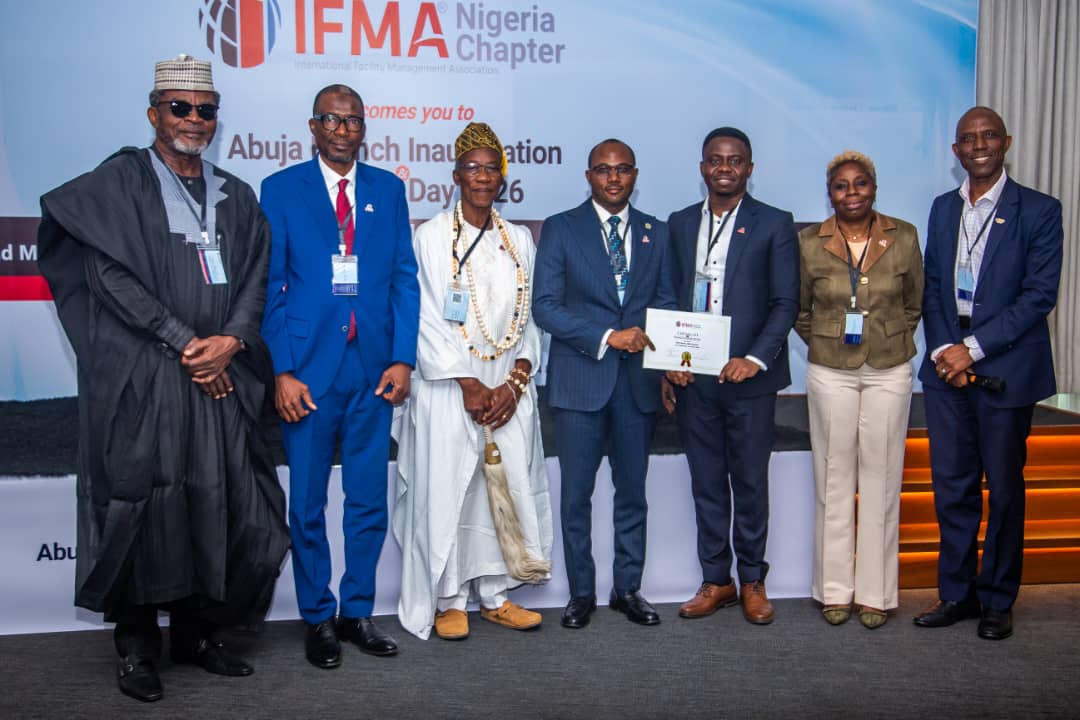
The International Facility Management Association’s Nigeria Chapter has inaugurated an Abuja branch to expand professional training, certification, industry collaboration and technology-led asset management in the Federal Capital Territory. The branch creates a new commercial and professional platform for property owners, facility operators and suppliers working across Abuja’s public buildings, offices, hospitals, airports and emerging smart-building market—but it is not itself a procurement programme or a guarantee of contracts.
What IFMA has opened in Abuja
IFMA Nigeria inaugurated the branch alongside its 2026 Advocacy Day at the Afreximbank African Trade Centre in Abuja. Independent reporting dates the event to 6 November 2026 and identifies the programme’s theme as “Beyond Maintenance: Leveraging Technology for Sustainable Facility Management Practice in Nigeria.”
The association says the branch will serve facility-management and built-environment professionals across Abuja and the wider northern region. Its stated priorities include professional training and certification, member development, student mentorship, industry networking and collaboration with property owners, businesses and public institutions.
IFMA Nigeria’s current official channel also identifies the Abuja coordinating team: Dr Oluwaseun Yinka Alabi as Branch Coordinator, Nnaemeka Samson Ebechidi as Coordinating Secretary and Towobola Adefeegbe as Coordinating Treasurer. The branch leadership says it will begin structured membership mobilisation and stakeholder engagement while building its operating programme.
Why the branch matters commercially
Abuja contains a large concentration of government offices, corporate headquarters, healthcare facilities, hotels, embassies, educational institutions and infrastructure assets. Each creates recurring demand for maintenance planning, energy management, cleaning, security, fire and safety systems, water services, building controls, waste management and specialist engineering.
Facility management is commercially important because the cost of a building continues long after construction. Poor maintenance can shorten asset life, increase energy consumption, interrupt tenant operations and turn small defects into major capital repairs. A stronger professional network can help owners compare standards, improve procurement specifications and build a deeper pool of trained service providers.
The Abuja branch’s launch at a LEED Platinum-certified property also places energy efficiency and smart-building performance at the centre of the discussion. Participants toured the Afreximbank African Trade Centre and the African Medical Centre of Excellence to examine how building-management systems, sensors, indoor-environment controls and sustainability measures can affect operating performance.
Technology and service opportunities
The strongest near-term opportunity is not a single announced contract. It is the expansion of a local professional ecosystem around complex buildings. Potential demand areas include:
- Building-management systems: sensors, controls, dashboards and analytics for power, cooling, water and equipment performance.
- Preventive maintenance: scheduled inspection, asset registers, computerised maintenance systems and condition-based servicing.
- Energy services: audits, solar integration, power-quality management, efficient lighting and heating, ventilation and air-conditioning optimisation.
- Specialist operations: lifts, fire systems, medical facilities, data rooms, water treatment, indoor-air quality and safety compliance.
- Soft services: professional cleaning, security, landscaping, waste management, reception and workplace support.
- Training and certification: structured professional development for facility managers, technicians, contractors and built-environment students.
For local technology companies, the commercial opening lies in translating smart-building tools into measurable savings and reliability. Property owners will need evidence that software, sensors or automation can reduce downtime, lower energy use, improve compliance or extend equipment life—not simply add another subscription or dashboard.
The public-asset connection
A representative of the Federal Ministry of Housing and Urban Development told the inauguration that government is advancing digital and preventive-maintenance systems and pursuing collaboration with professional bodies. This signals policy interest, but no budget, tender, contract value or procurement timetable was disclosed at the event.
Companies should therefore separate general institutional engagement from a live purchasing opportunity. Any public-sector work must still follow the relevant procurement process, technical requirements and approval route. Suppliers should not represent IFMA membership or attendance at a branch event as evidence of government endorsement.
Practical implications for Abuja businesses
- Property owners: review whether maintenance plans are based on asset condition, service-level data and whole-life cost rather than emergency repairs.
- Facility-service firms: document response times, staff competence, safety records, equipment availability and measurable client outcomes before pursuing larger contracts.
- Technology vendors: prepare pilot cases showing how building controls or maintenance software affect energy, downtime and operating cost.
- Developers and investors: include operating and replacement costs in project feasibility work; premium finishes do not substitute for maintainable systems.
- Professionals and students: confirm the branch’s actual membership, training and certification calendar directly with IFMA before paying for any third-party course.
What to watch next
The branch’s business impact will be clearer when it publishes a programme of training, certification, technical events and partnerships—and when participating organisations can show measurable improvement in asset performance. Useful indicators will include active membership, courses delivered, employer participation, student placements, procurement collaborations and documented reductions in energy use or unplanned downtime.
For Abuja’s commercial property and infrastructure market, the broader test is whether facility management is treated as a strategic operating function rather than a reactive maintenance expense. The new branch gives the sector a local platform; the value will come from the standards, skills and verified outcomes that follow.
Related Reads
- Abuja Real Estate Fest Sets 12 November Property Deal Programme
- Top 10 Professional Cleaning Companies in Abuja — 2026 Guide
- AFRIDATA Unveils $650m–$1bn Nigeria Data Centre Plan at Abuja Launch
- Bloom Pharmacity Plans 30-Hectare Abuja Pharma Park, Targets 2027 Onboarding
Sources
- IFMA Nigeria Chapter: Abuja branch coordinating team and inauguration updates, accessed 14 November 2026.
- International Facility Management Association: Nigeria Chapter listing, accessed 14 November 2026.
- Business Metrics: IFMA Nigeria calls for preventive maintenance and technology adoption, 8 November 2026.
- The Guardian: technology-driven maintenance and the IFMA Abuja branch inauguration, 9 November 2026.
- THISDAY: IFMA Nigeria inaugurates Abuja branch, 10 November 2026.
Leave a Reply
You must be logged in to post a comment.