
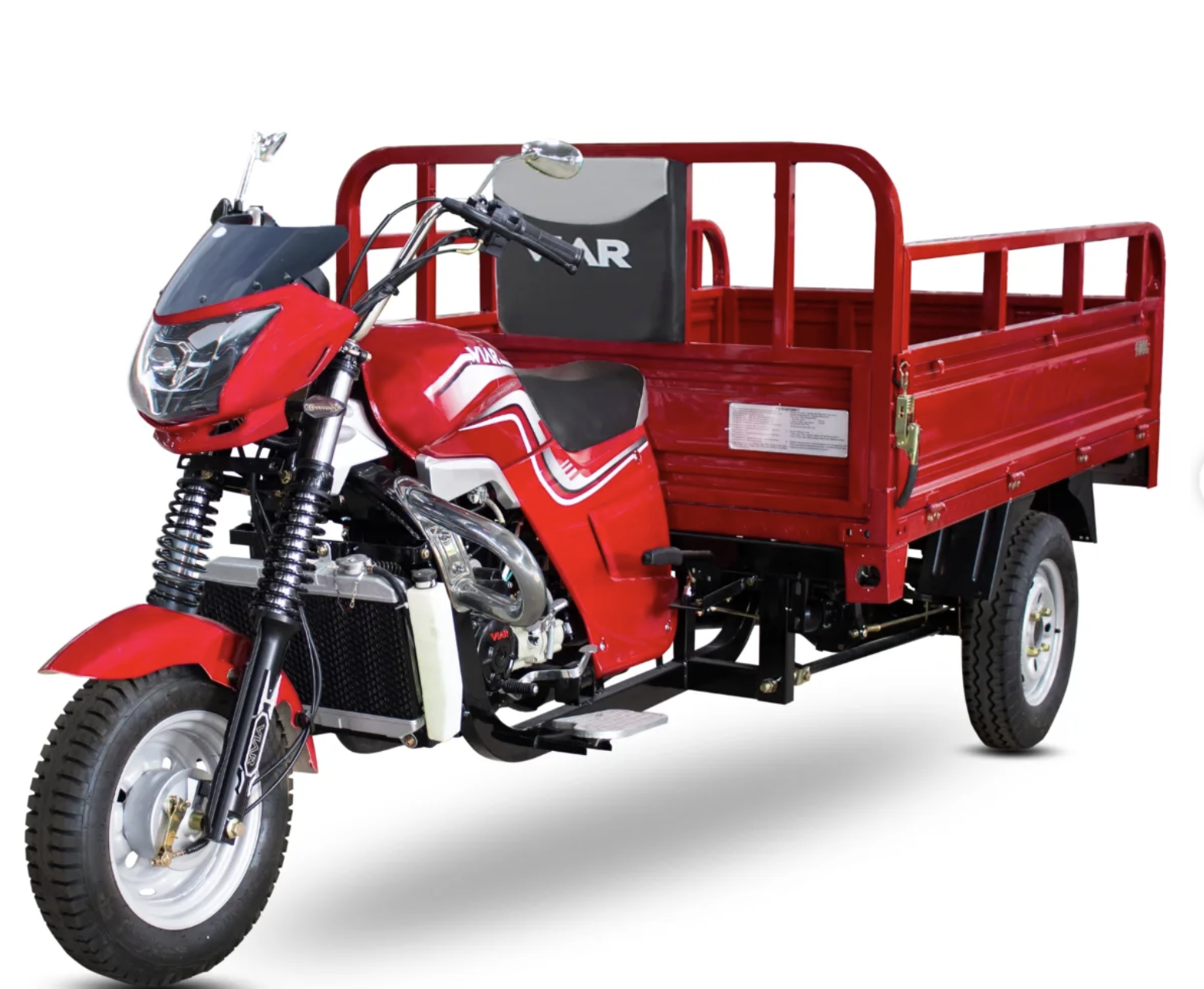
Zeetin Technologies will formally unveil its Abuja tricycle assembly operation and locally assembled VZ150 and VZ200 cargo models on October 21, positioning its Idu Industrial Area facility as a new manufacturing and last-mile logistics platform for traders, farmers, artisans and distributors.
The company says the two models are being assembled in Abuja through a technical partnership with Indonesia’s VIAR Motor, while former President Goodluck Jonathan is billed to chair the unveiling. The move gives the Federal Capital Territory a fresh industrial story with direct relevance to small-business logistics, local manufacturing, vehicle servicing and component supply.
Abuja plant moves into tricycle assembly
Zeetin Technologies already operates from the Idu Industrial Area, one of Abuja’s main industrial districts. Ahead of the October 21 event, the company said its VZ150 and VZ200 three-wheelers are being assembled locally and will be distributed in Nigeria.
Reports by Arise News, The Sun and THISDAY all place the unveiling on Wednesday, October 21, 2026.
The company’s stated commercial case is straightforward: cargo and passenger tricycles are working assets for market traders, farmers moving produce, artisans, distributors handling last-mile delivery and operators serving commuter routes. Bringing assembly closer to those users could shorten supply chains for finished vehicles, spare parts and after-sales support if Zeetin is able to scale distribution beyond Abuja.
Local content is the bigger industrial test
Zeetin says Nigerian technicians working at the plant received training at VIAR’s operations in Semarang, Indonesia. It also points to jobs in quality control, planning, sales and after-sales service, as well as opportunities for dealers, workshops and parts traders around the assembly business.
The more consequential part of the plan is what comes next. Chairman Robert Azibaola said the company intends to deepen local content over time, including sourcing or producing more components in Nigeria. Zeetin has also signalled future compressed-natural-gas and electric variants.
For Abuja’s industrial economy, that roadmap matters more than the launch ceremony itself. Assembly creates value, but the larger multiplier comes when fabrication, components, maintenance, finance, logistics and distribution begin to localise around a plant.
What this could mean for Abuja SMEs
The strongest near-term opportunity is in commercial mobility. Many SMEs still depend on relatively expensive vans, informal delivery networks or imported three-wheelers to move goods. A locally assembled cargo vehicle could become commercially meaningful if Zeetin can combine competitive pricing with parts availability, warranties, financing and reliable service coverage.
The factory could also create supplier opportunities for Abuja and Nigerian businesses in tyres, batteries, fabricated parts, seats, wiring, paints, packaging, logistics and workshop services. Those opportunities, however, will depend on the actual local-content programme and procurement model rather than the headline fact of local assembly.
The company has not publicly disclosed production capacity, launch pricing, dealer margins, annual output targets or the proportion of components that will initially be sourced in Nigeria. It has also not announced a timetable for the proposed CNG and electric versions.
What buyers, dealers and suppliers should verify
Businesses considering the VZ150 or VZ200 should look beyond the launch and compare total operating cost: purchase price, fuel consumption, payload, warranty, spare-parts availability, service intervals and resale prospects. Prospective dealers should also ask about territory rights, inventory requirements, after-sales obligations and working-capital needs.
For suppliers, the key questions are which components Zeetin plans to localise first, the technical standards required, expected order volumes and whether vendor-development support will be available. Those details will determine whether the Abuja plant becomes primarily an assembly operation or develops into a broader manufacturing ecosystem.
Related Reads
- Jetour’s Abuja Experience Signals Deeper Push Into FCT Auto Market
- Giri Agro-Processing Hub Seeks $105m as Abuja Joins Federal Investment Pipeline
- TRÏNŪ Opens 700-Container Bonded Warehouse in Kuje, Expands Abuja Cargo Clearance
Leave a Reply
You must be logged in to post a comment.