
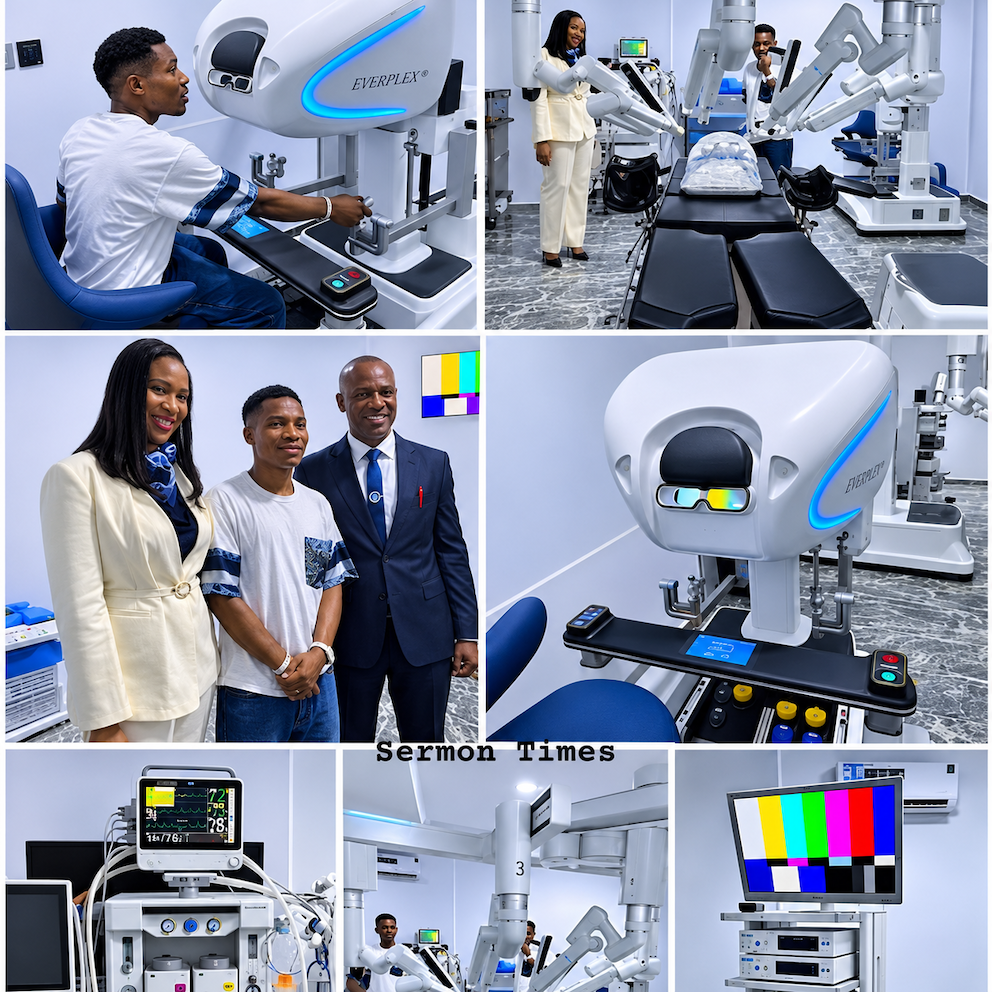
Eleos Specialist Hospital has commissioned a robotic-assisted surgery platform in Abuja, adding advanced surgical capacity to the city’s private healthcare market and raising commercial questions about retaining treatment spending in Nigeria, developing specialist skills and making high-cost procedures accessible through insurance and other financing.
The hospital commissioned the platform at a ceremony reported on 18 November 2026. Several news reports describe it as the second of its kind in Northern Nigeria. That regional ranking is attributed to those reports rather than independently verified against every hospital and surgical-system installation.
The commissioning was covered on 19–20 November by Vanguard, The Sun and other outlets. The technology is intended for selected complex procedures, particularly in urology, not for every operation or for autonomous surgery without a trained medical professional.
Private capital adds another layer to Abuja’s healthcare market
The investment gives Eleos a technology-intensive service that may help retain some patients who otherwise consider travelling abroad for specialist procedures. Abuja already functions as a referral and decision-making centre for patients from across Nigeria; the addition of another robotic-assisted platform could strengthen competition among high-acuity private providers.
But an installation is not the same as demonstrated affordability or routine utilisation. The hospital has not disclosed a verified equipment purchase price, the manufacturer or model in the reporting reviewed, projected procedure volumes, financing terms, or a standard price list for robotic-assisted procedures. These missing figures prevent a responsible calculation of the project’s capital value, payback period or likely contribution to the local economy.
Which services may benefit?
According to hospital representatives, the platform is intended to give surgeons greater precision, visualisation and instrument control during appropriate minimally invasive procedures. The reported focus includes selected complex urological operations. Such systems are surgeon-directed instruments; they do not replace clinical judgement, diagnostic assessment or patient-specific treatment planning.
Eleos already lists prostate, bladder, kidney and urinary-tract services on its official Abuja hospital page, including laser and minimally invasive procedures. The new platform is an expansion of specialised technical capability, not proof that every treatment on the hospital’s existing service list will use robotics.
The hospital’s Medical Director and Chief Robotic Surgeon, Dr Paul Eberechukwu Ngwu, said the initiative would prioritise patient safety, surgical training and responsible use of emerging medical technologies. Managing Director Dr Victoria Ogechi Ngwu linked the acquisition to the hospital’s plans to strengthen specialist services and partnerships.
The medical-tourism business case
During the ceremony, Professor Chima Ariel Onoka, representing National Health Insurance Authority Director-General Dr Kelechi Ohiri, highlighted the cost of patients seeking complex treatments abroad. The argument is that some treatment spending, associated travel costs and specialist professional opportunities could remain within Nigeria if safe, accessible domestic alternatives expand.
Those potential benefits remain conditional. The share of Nigerians who would choose local care, average patient costs and the value of spending retained were not independently measured for this facility. A well-equipped surgical platform needs trained clinicians, biomedical engineering support, consumables, infection control, dependable power, maintenance contracts and sustained patient demand.
Insurance coverage is a particularly important constraint. Onoka called for stronger health-insurance and healthcare-financing arrangements, but the public reports do not confirm that robotic-assisted procedures at Eleos are presently covered by NHIA or any particular insurer. Patients should verify eligibility, exclusions and total costs directly before booking care.
Opportunities and cautions for Abuja businesses
- Biomedical engineering and equipment services: advanced medical infrastructure creates ongoing requirements for maintenance, calibration, consumables and support, although no supplier contract or open tender has been identified.
- Clinical training providers: surgeon, theatre-team and biomedical technician training could become more valuable as hospitals introduce technology-intensive procedures.
- Health insurers and financiers: transparent case selection, pricing and outcomes are prerequisites for sustainable product design; a commissioning ceremony does not establish coverage.
- Hospitals and investors: capital-intensive equipment must be evaluated against demand, staffing, infection-control standards and ongoing operating costs rather than publicity alone.
- Patients: ask a qualified clinical team about suitability, alternatives, expected benefits, possible complications, costs and insurance arrangements. This news report is not medical advice.
What to watch next
Key commercial benchmarks will include the confirmed system specifications, approved indications, surgeon credentialling and training arrangements, published pricing, insurer participation, procedure volumes and independently assessed clinical outcomes. The opening is a verifiable healthcare investment milestone; those future measures will determine its lasting market impact.
Related Reads
- Denam Group Enters Healthcare Sector With Gwarinpa Pharmacy
- Bloom Pharmacity Plans Abuja Pharma Park
- IFMA Nigeria Opens Abuja Branch for Smart Facility Management
Leave a Reply
You must be logged in to post a comment.